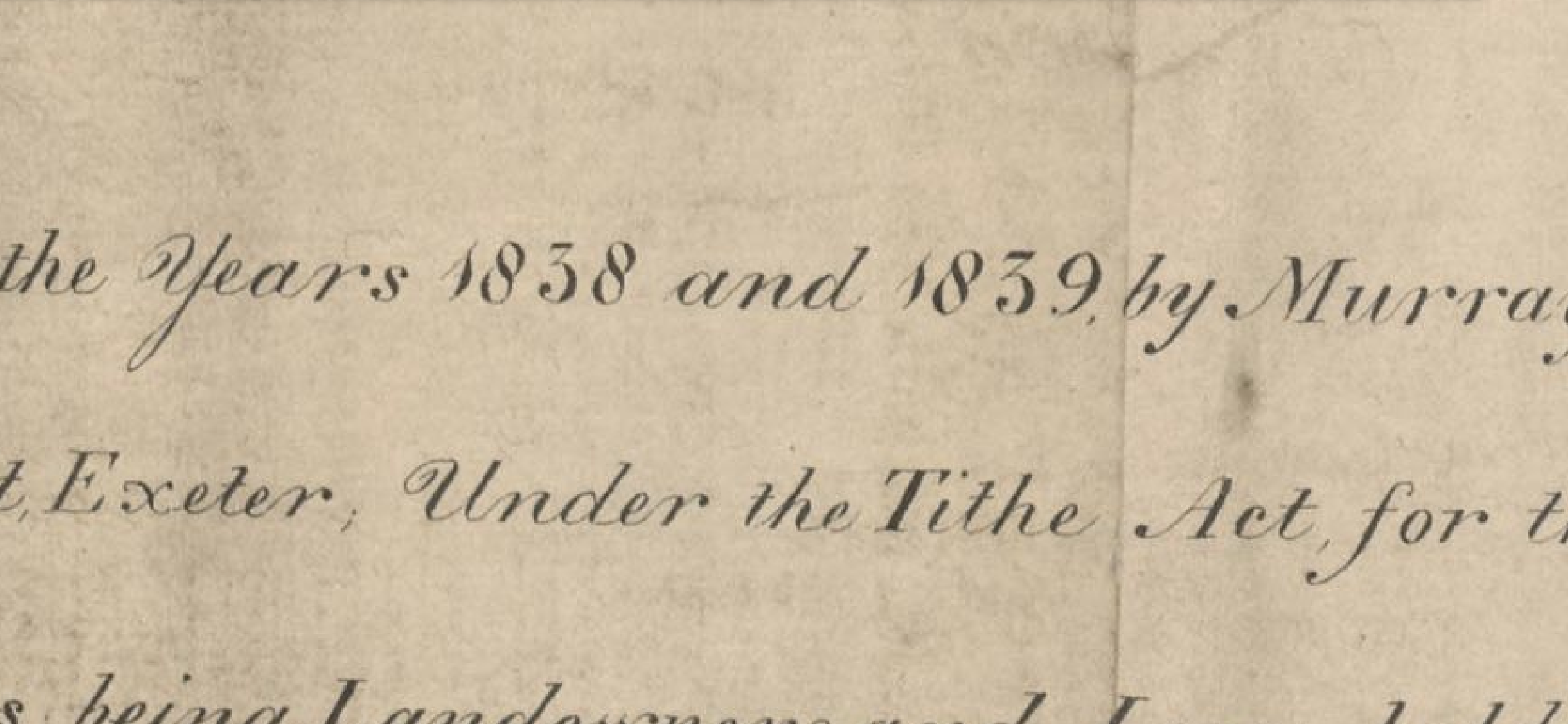
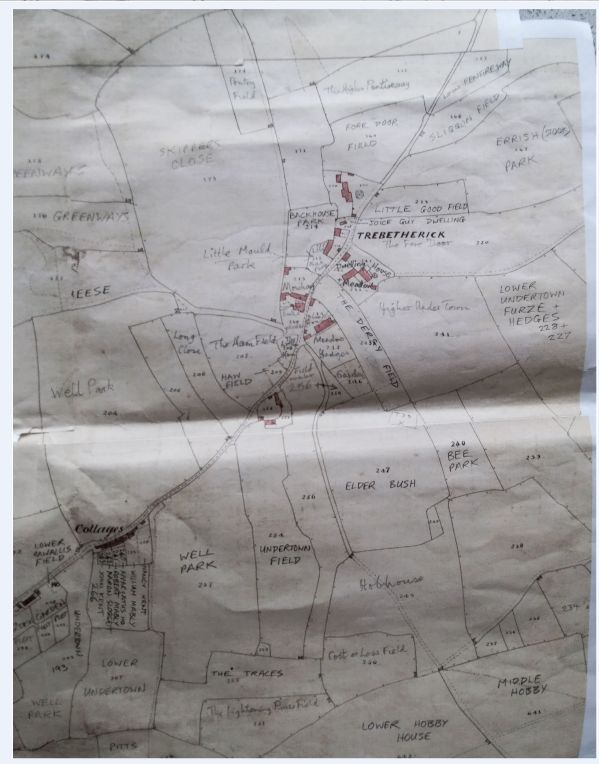
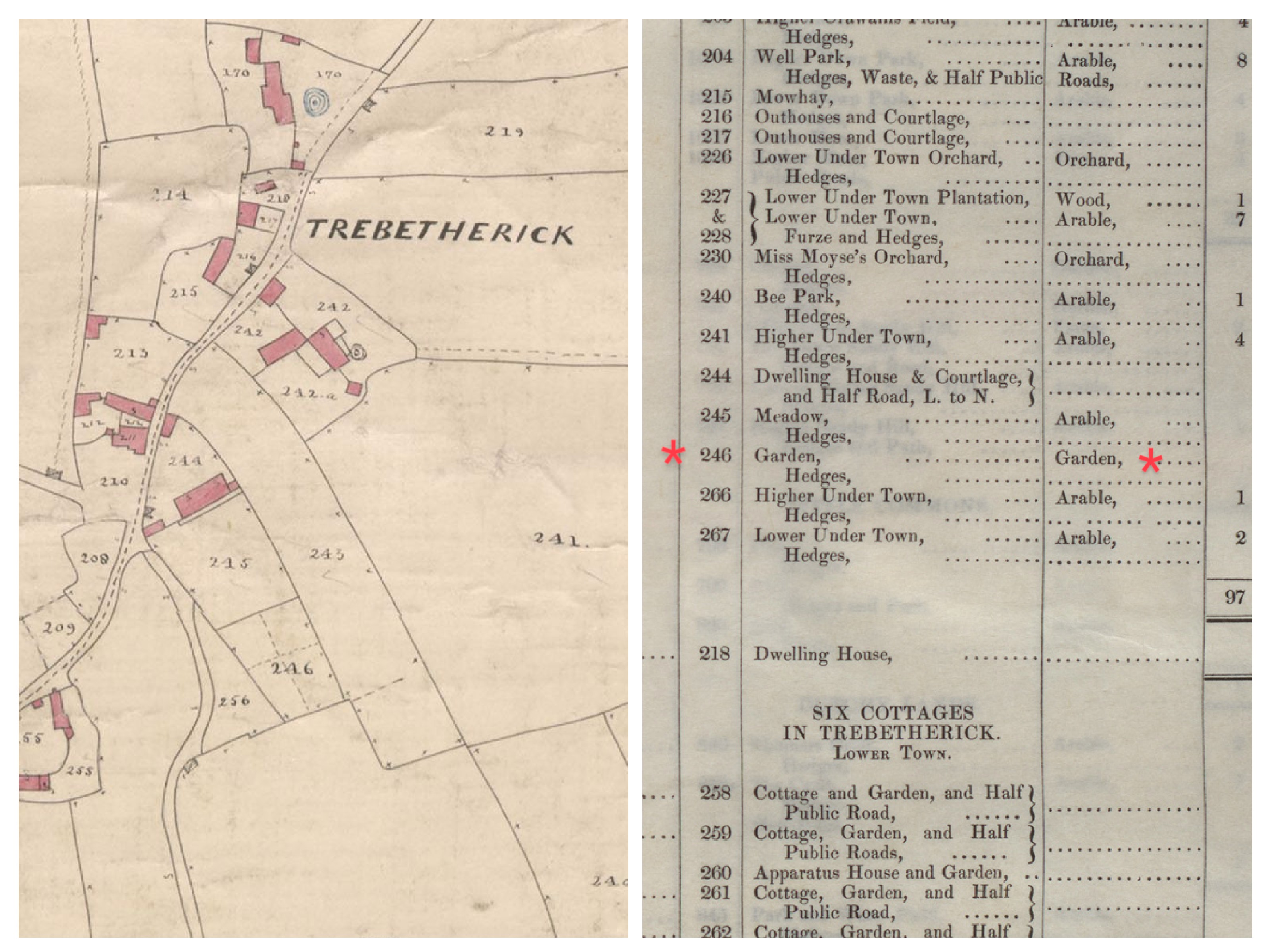
Tithe Maps

Coastguards
On 29 December 1807, HMS Anson, trapped by a lee shore off Loe Bar, Cornwall, was driven onto rocks and between 60 and 190 men were lost. Inspired by the 1807 wreck of HMS Anson, Henry Trengrouse, Cornish cabinet maker, patented a “portable apparatus for saving lives from a shipwreck. A rocket was used to propel a thin line onto a ship (far from easy in a storm and often needing many attempts), allowing a thicker rope to be hauled on so people could then be hauled ashore in a canvas sling (breeches) above the angry waves and lethal rocks. The breeches buoy, a life-saving apparatus for rescuing people from shipwrecks, is primarily credited to British inventor Henry Trengrouse (1772–1854). While Captain George William Manby also developed a famous mortar-based rescue system in 1808, Trengrouse is generally recognized for the specific “breeches buoy” apparatus (originally termed the “Bosun’s Chair”.
Trebetherick Coastguard Cottages and Rocket Equipment House was originally built in 1840 as a pair of semi-detached buildings for the full time Coastguards. Eventually as the RNLI grew and developed, the role of Coastguard became a part time position, the cottages were sold separately as Upalong and Tregawne. The latter was owned and run as Trebetherick Stores by the Tellam-Hockings and as of 2023 is Flo’s Deli.
 1900 Peace and Plenty and Lifeboat Arab.
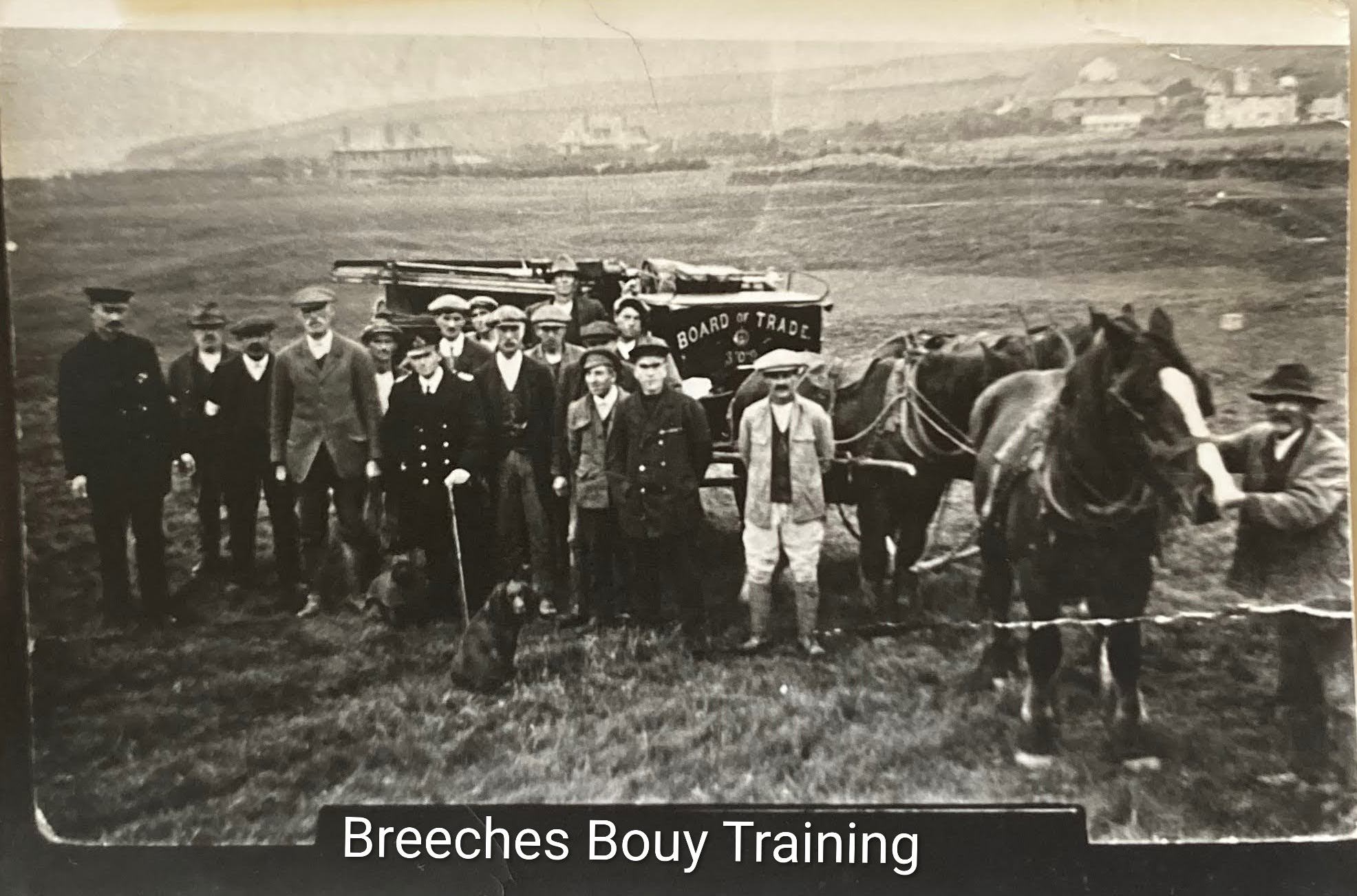
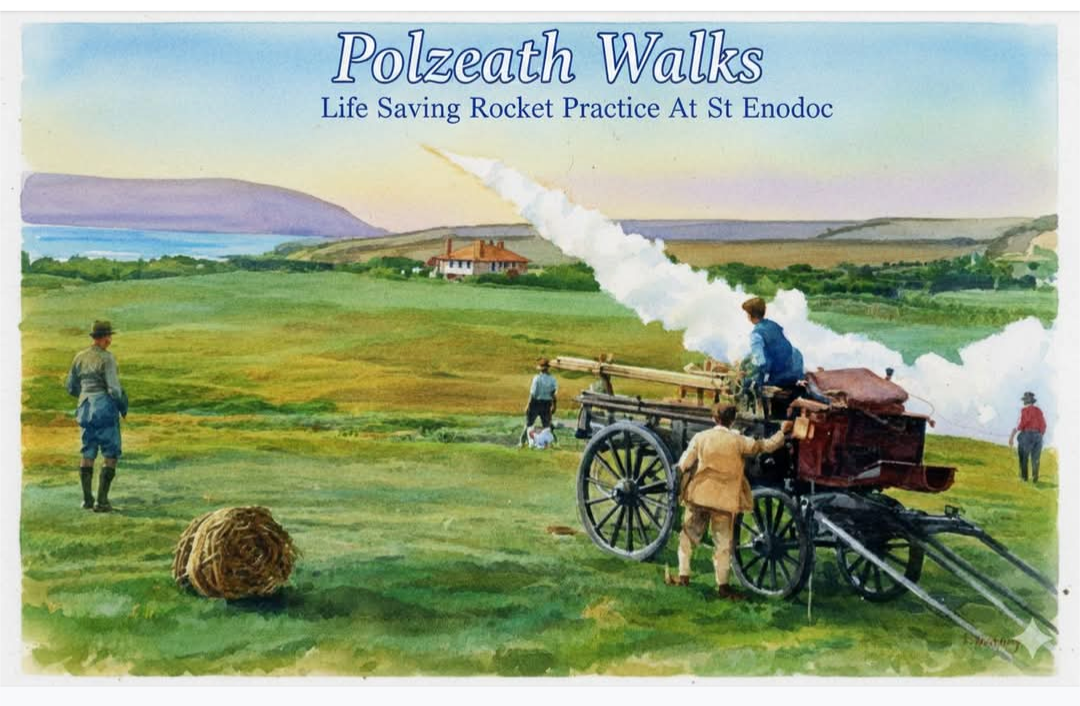
The Trebetherick Coastguard team regularly risked their lives. In April 1900, they rescued five crewmen from the wrecked ketch Peace and Plenty as she drifted helplessly towards Greenaway and Daymer. The storm was so bad it tragically wrecked and claimed the lives of several lifeboat men sent to assist. This painting captures something of the Trebetherick Coastguards and a time when Trebetherick Point and Greenaway were houseless. The rocket team of 20 volunteers in the early 1900s is seen here in action practising firing a line from their apparatus across the fields towards Daymer beach.
1900 Peace and Plenty and Lifeboat Arab.
The Trebetherick Coastguard team regularly risked their lives. In April 1900, they rescued five crewmen from the wrecked ketch Peace and Plenty as she drifted helplessly towards Greenaway and Daymer. The storm was so bad it tragically wrecked and claimed the lives of several lifeboat men sent to assist. This painting captures something of the Trebetherick Coastguards and a time when Trebetherick Point and Greenaway were houseless. The rocket team of 20 volunteers in the early 1900s is seen here in action practising firing a line from their apparatus across the fields towards Daymer beach.
From the 1880s to the 1930s, the Trebetherick Rocket Apparatus was regularly brought down by a horse drawn cart for practice. The apparatus was kept in the distinctive brick building still known as The Rocket House, adjacent to the Coastguard Cottages. The team were nationally recognised when the company was awarded The Wreck Service Shield (a top national honour!) in 1939 for saving three lives from the wreck of HMS Medea.
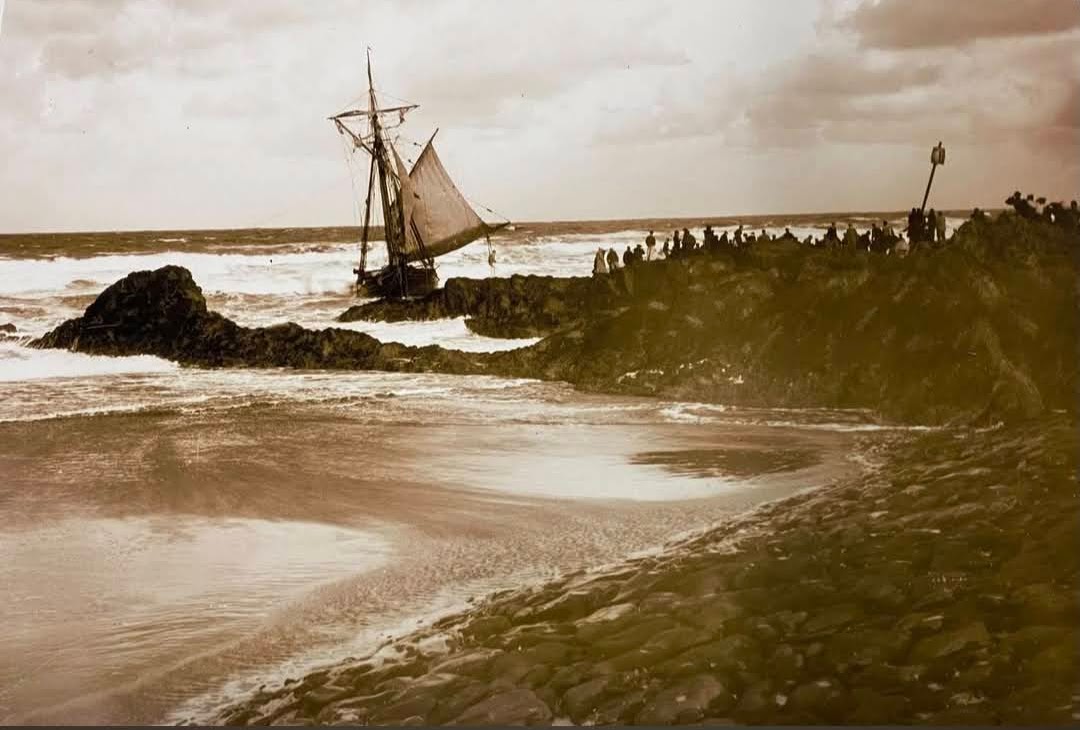
5 January 1939 The HMS Medea was being towed from Portsmouth to a breaker’s yard at Newport, Gwent when it broke its tow-rope in a gale off Trevose Head and drifted into the mouth of the Camel Estuary and grounded on Greenaway rocks. Searchlights from the Trebetherick and Port Isaac coastguard teams lit up the scene, where the crew of the Medea were huddled on the bridge. The teams fired six rockets with lines towards the Medea with the sixth being successful and the crew of four were taken off by breeches buoy. A fifth member of the crew had previously been lost overboard.
Brian Oaten was born in Trebetherick the very next day 6JAN39 in the same storm! We remember being told, “The storm was so strong that the Trebetherick coastguards had to crawl on hands and knees to get to a position on Greenaway where they could fire their rocket breeches-buoy rope-based rescue devices. They had to call for Port Isaac coast guards back up who had bigger rockets”
HMS Medea was built in 1915 as HMS M22, a M15-class Monitor warship with a crew of 69. It was converted and renamed around 1925 as a minelayer, and then in 1937 as a training ship
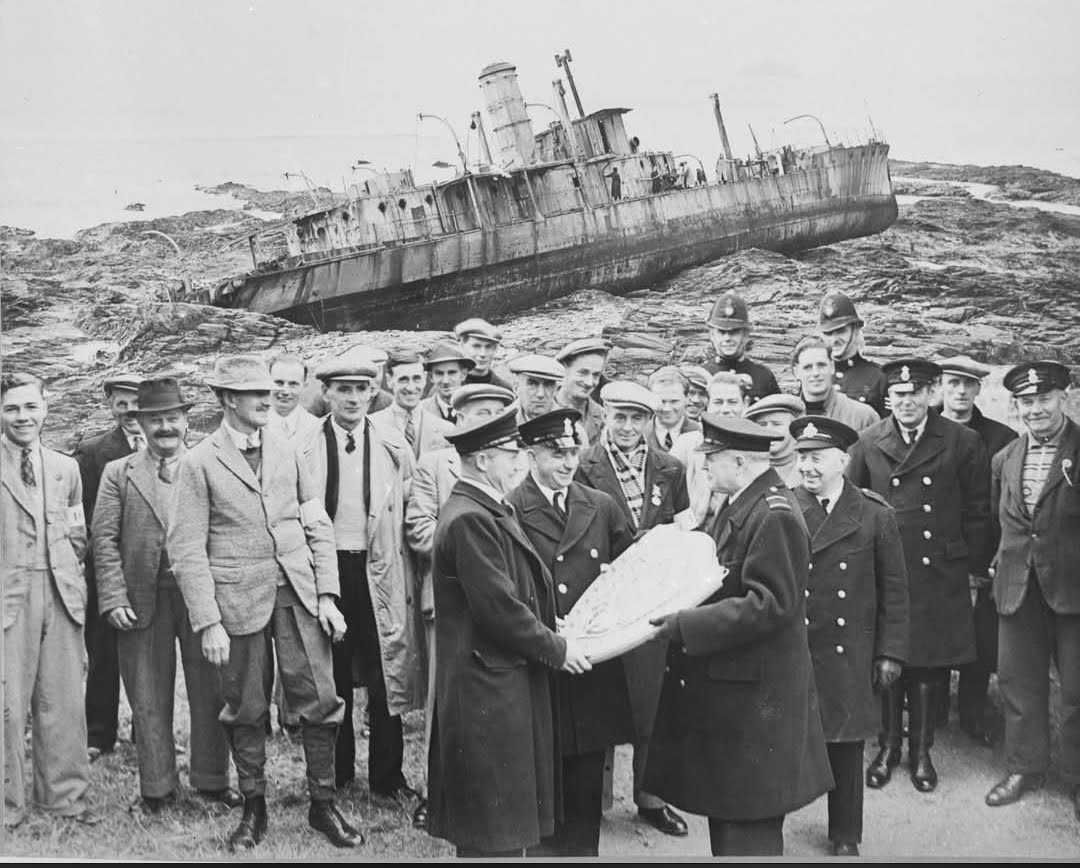
The wonderful “photoshopped” image of the ship and presentation can be found at Kresen Kernow, the home of Cornwall’s archives. The glass negatives reference number is GE/2/CG/641A
‘Outstanding heroism rewarded: Captain V S Rashleigh presenting the Board of Trade Shield for the most meritorious service of 1939 by any Rocket Life-Saving Apparatus Company, to Coastguard Macdonald, of Port Isaac, and Volunteer R S Male, of Trebetherick, for the rescue of three lives from the SS Medea on Greenaway Rocks on January 2nd, 1939. In the background are the LSA crews, and police officers who assisted at the rescue. The presentation is superimposed on a photo of the wreck as it still appears on the Greenaway Rocks at the estuary of the River Camel’ (Cornish Guardian newspaper, Thursday 7 March 1940, page 7).
The Shop
The Chapel (Polzeath)
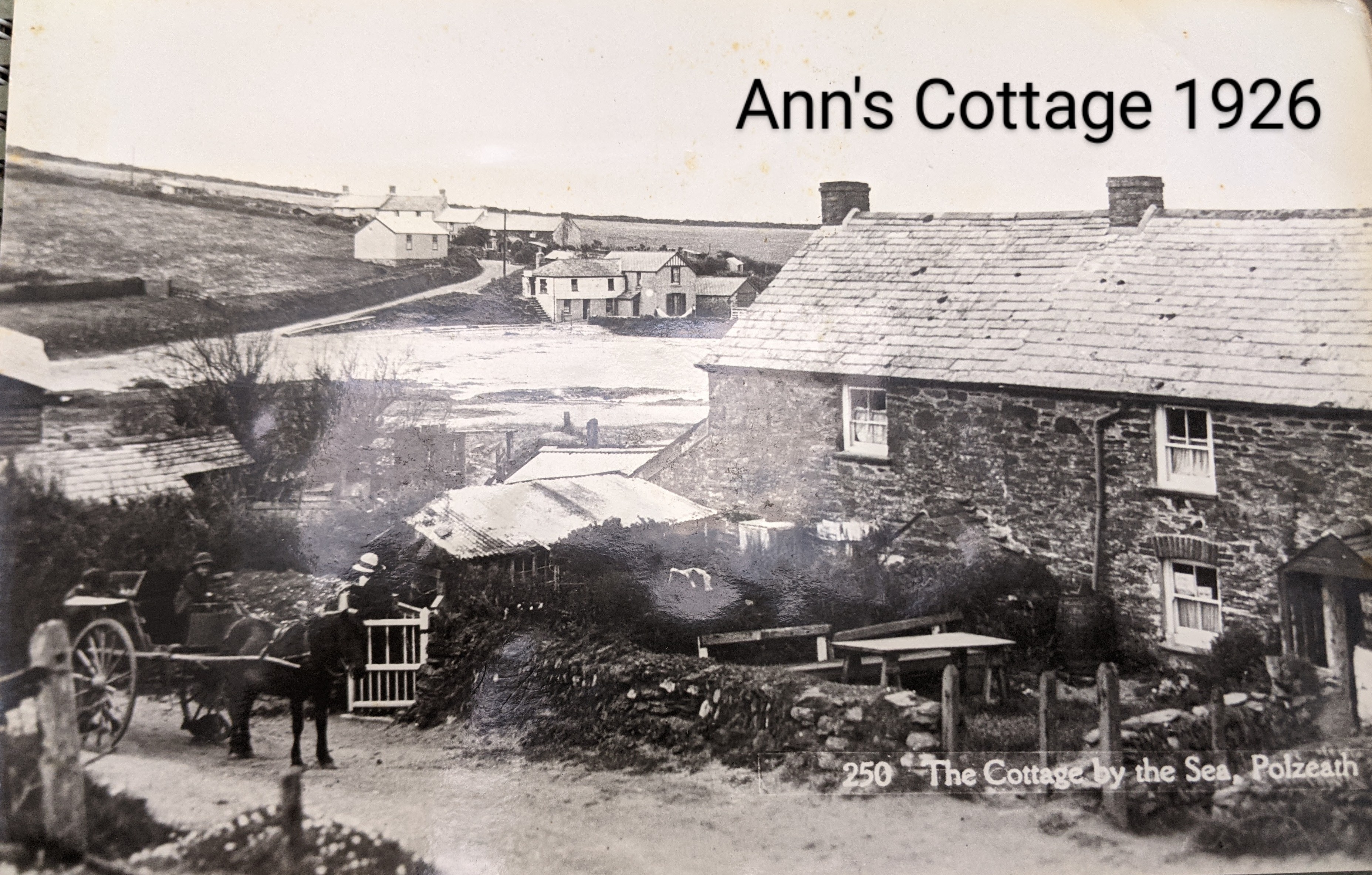
1927 - Worthy House, Trebetherick Telephone Exchange starts in the Paper Shop and Post Office.
-
The Postmaster was George Harris, who ran the shop, delivered the mail and papers and for thirty years connected the phone calls with the hand opperated exchange. As the numbers of holiday homes and summer visitors increased, George needed Summer time help. As a teenager, Brian took this summer holiday job of assistant postman at Trebetherick Post Office, Worthy House. Brian used George’s 1934 black Austen 7 van to deliver mail and papers. George was full of fun and when operating the phone lines he used to say to the callers “rubber knees” for ‘number please’ and “trying to forget you” for ‘trying to connect you’.
-
In 1957 the new telephone exchange building was built next to Old Farm.
1938 Domestic Electricity Was Brought to all Trebetherick Properties.
The 1901 CENSUS and Early Life in TREBETHERICK
There were eight households and one uninhabited house, 17 adults and 11 children. 1901 TREBETHERICK INHABITANTS were 3 farmers, John Wills, John Mably, Charles Mably. Humphrey Craddock a stone quarry mason, Ann White a shirt maker seamstress, The 2 coastguards were Benjamin Longworthy from Liverpool and William Clode, The Mably sisters Joanna and Harriet were elderly and retired but employed several labourers. One visiting migrant or in-service working family Cottell, husband, wife and 5 children, formerly of St Tudy and then Trevalga, listed with 75yr old widowed farmer, John Mably.
No road between Trebetherick and Polzeath - No road across Polzeath Beach
At this time there was no road between Trebetherick and Polzeath only a pedestrian/pony track through the six fields between the two villages. The main way in and out of Polzeath was via Dunder Hill. An elderly gentleman visiting us at The Haven could remember using the track to walk from Trebetherick to Polzeath and having to open and close the six field gates to get there.
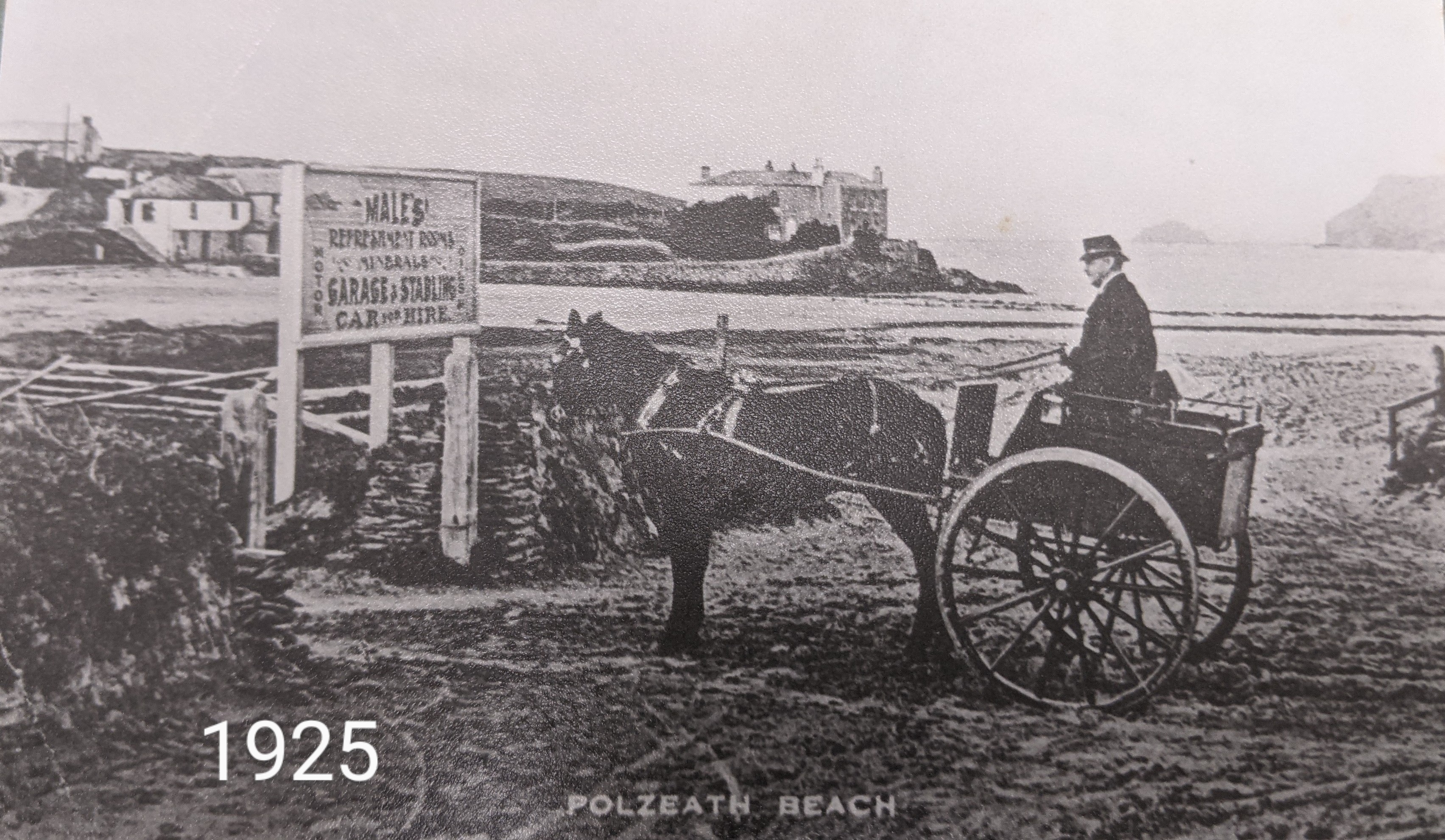
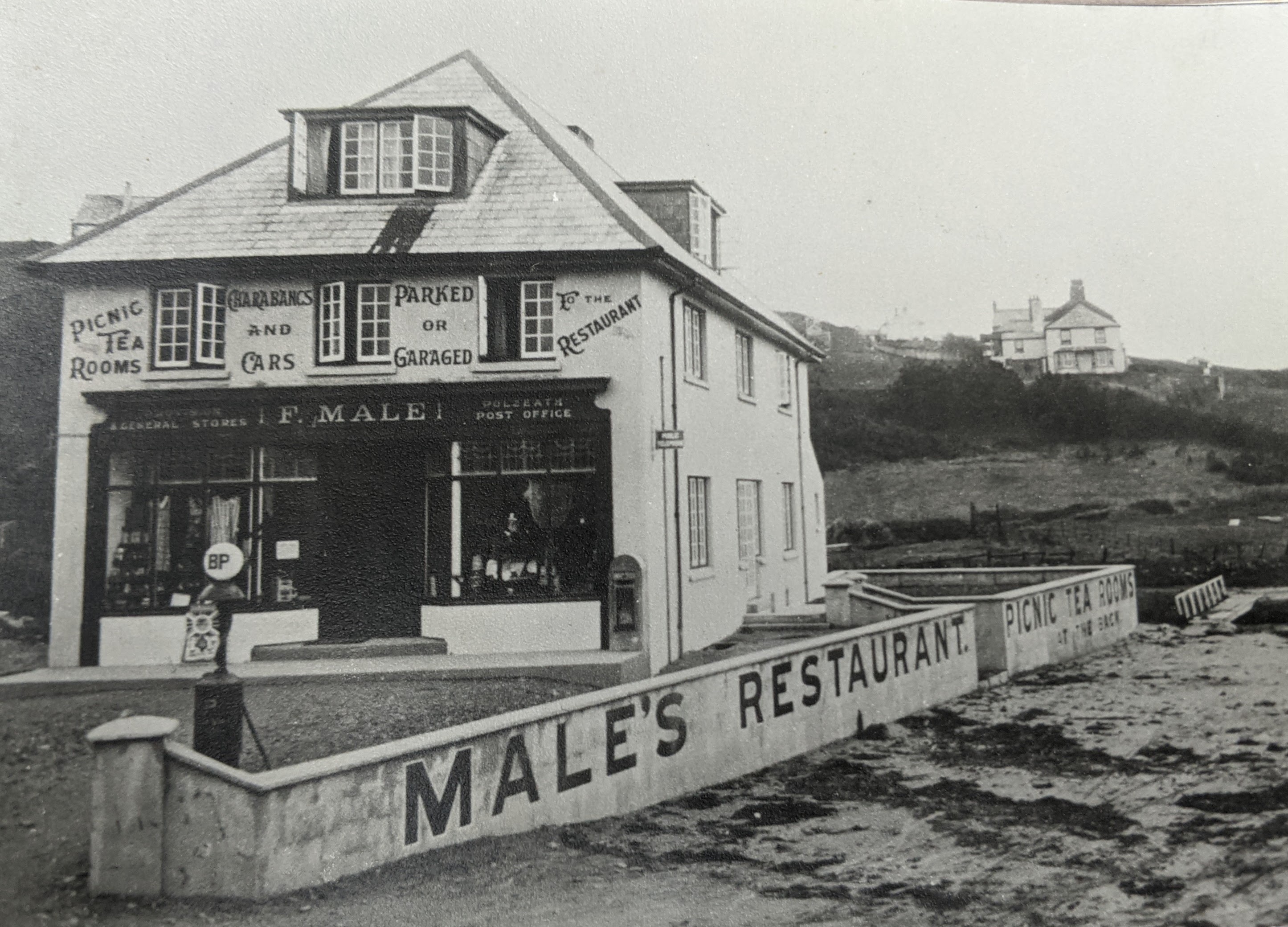
The residents of Polzeath would make journeys north and eastwards up Dunder Hill by pony and trap or cart and horse to market, for business, or for visiting further afield. It was customary for passengers and children to walk up the hills to lighten the load for the pony. On the return journey, when reaching Port Quin Cross, being mostly downhill and flat from there to the top of Dunder Hill, Polzeath, it was possible to give the ponies a good gallop. Those flat fields are called Galloping Fields. In summer, day trippers to Polzeath beach, for example the St. Mabyn and St. Kew Sunday School or feast day outings, travelled by horse drawn charabanc, (open cart or coach with bench seats). On arrival the horses were stabled, fed and watered at F Male’s Stables and Picnic Tea Rooms, charabancs stabled, cars parked (photo) (no relation to Trebetherick Higher Farm Harry and Basil Male )
F MALE’S Stables and Tea Rooms - Before the road was built
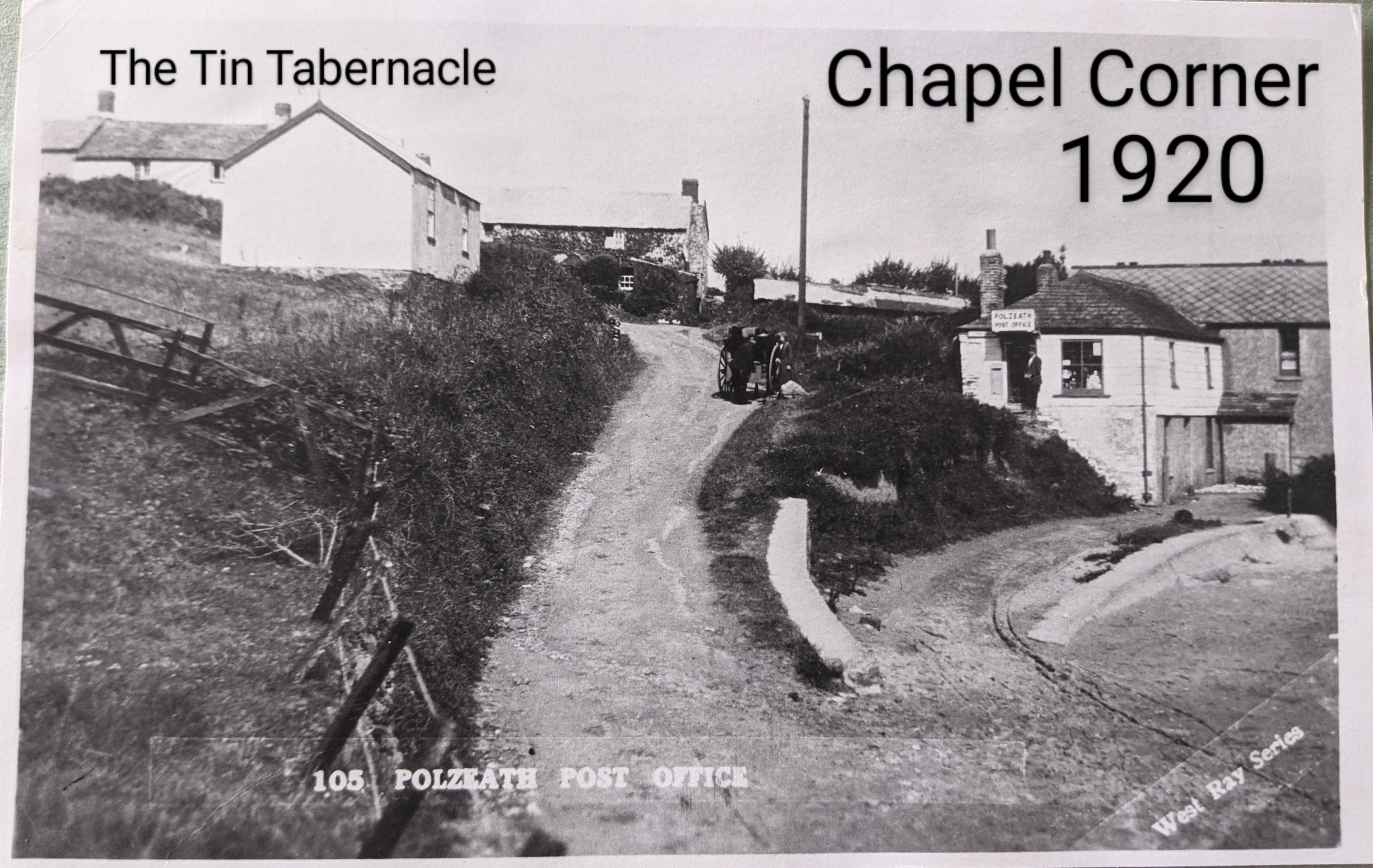
The Polzeath Chapel was moved into a purpose built shed in 1898 using a corrugated iron roof and became known locally as the Tin Tabernacle at Chapel Corner, (1920 photo). In 1932/3 the new chapel was built further away from the corner to allow for road improvements.
DAYMER LANE - SAND CARTING TRAFFIC
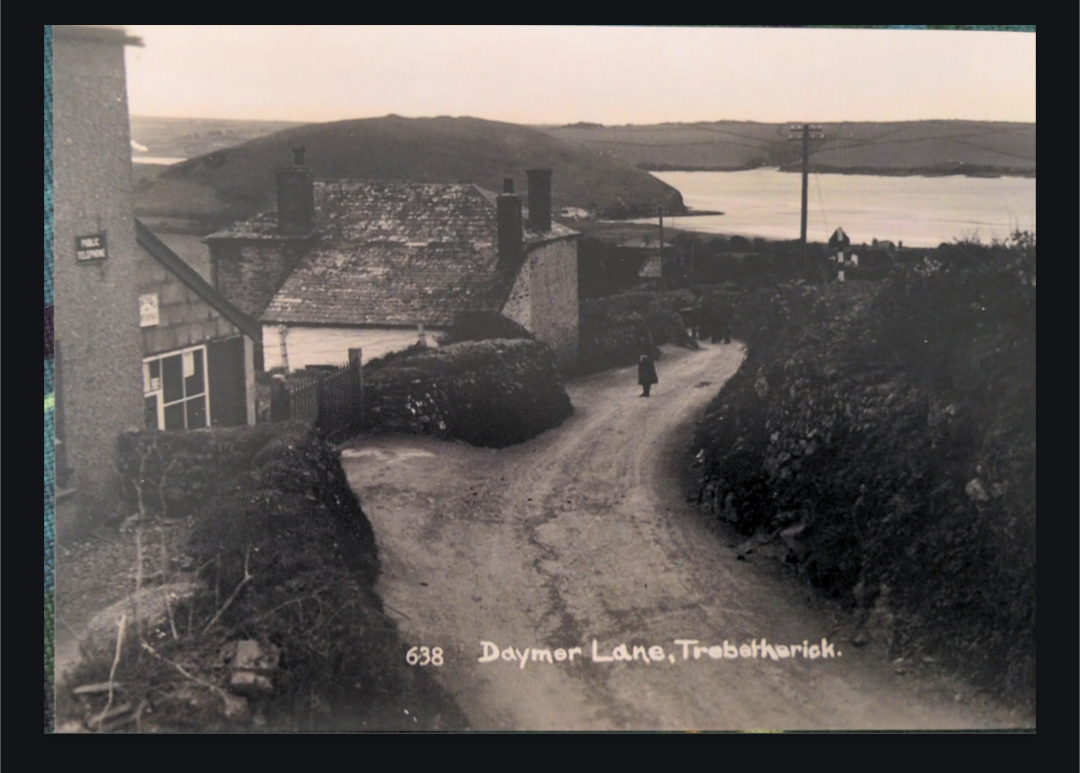
- 1920-40s - Sand Carter With Pony Nearing Lower Farm and the PO at The Top Of Daymer Lane
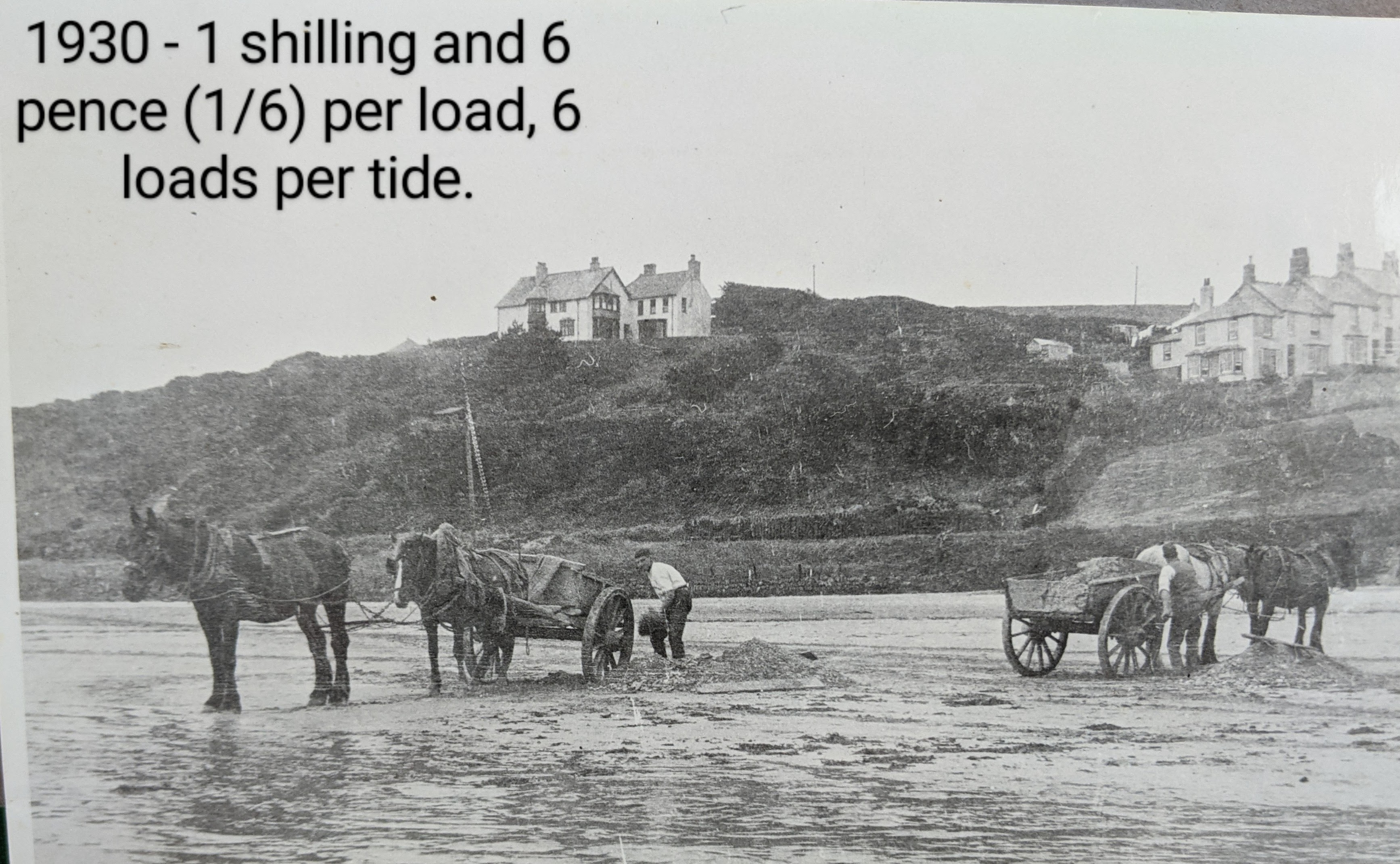
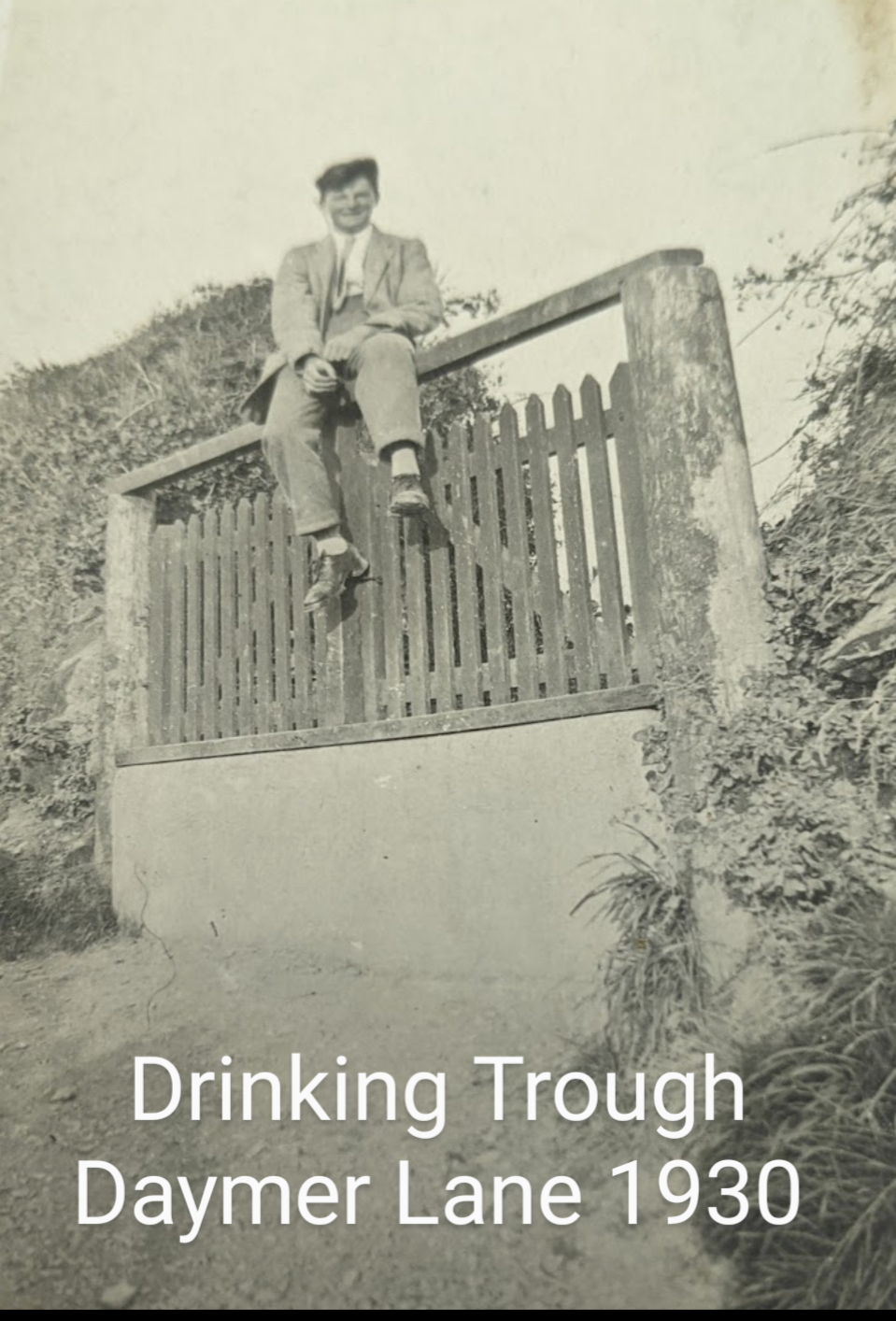
Tenant farmers’ manorial leases to Trewornan and Roscarrock required 12 cart loads of sea sand to be applied to every cultivated acre. The carters sold sea sand in 1930 for 1/6 per load, 6 loads being gathered at each tide, (photo). Halfway down Daymer Lane a large horse trough was built, fed by a spring (photo). This was essential in the 19c for the many horses pulling the heavy carts loaded with sand up the lane. Several cottages were built backing onto Daymer Lane (enjoying lovely south facing, sheltered gardens), perhaps as many as 8 or 10, all but Cobb Cottage and Torquil Cottage are now gone.
BRIAN’S GREAT GRANDPARENTS CAUGHT IN THE 1881 or 1891 BLIZZARD
Brian’s great grandparents were returning in their cart from market in 1881 or 1891 with a quantity of supplies and meat when it started to snow. It soon became a blizzard and they could go no further. They had to unhitch the pony and leaving the cart where it was stuck, they led the pony and just managed to struggle home. The told of the snow drifts being so deep that sometimes they had to walk on the tops of the hedges. It was two weeks before the freeze thawed enough for them to return to fetch the cart. Rather surprisingly all their meat had remained frozen and none was spoiled!!
Richard Tellam-Hocking’s First Trebetherick Shop (please contact me if you have a photo of this little shop I would love to have one)
At the top of Polzeath Hill was a purpose built shop, double fronted with door in the middle, run by Ralph Tellem-Hocking’s father, Richard. In the summer they made ice-cream which his wife sold on the beach. When she needed more she waved a flag as a signal to her husband to bring down more supplies. At a later date this little building was re-purposed as the Polzeath doctors surgery.
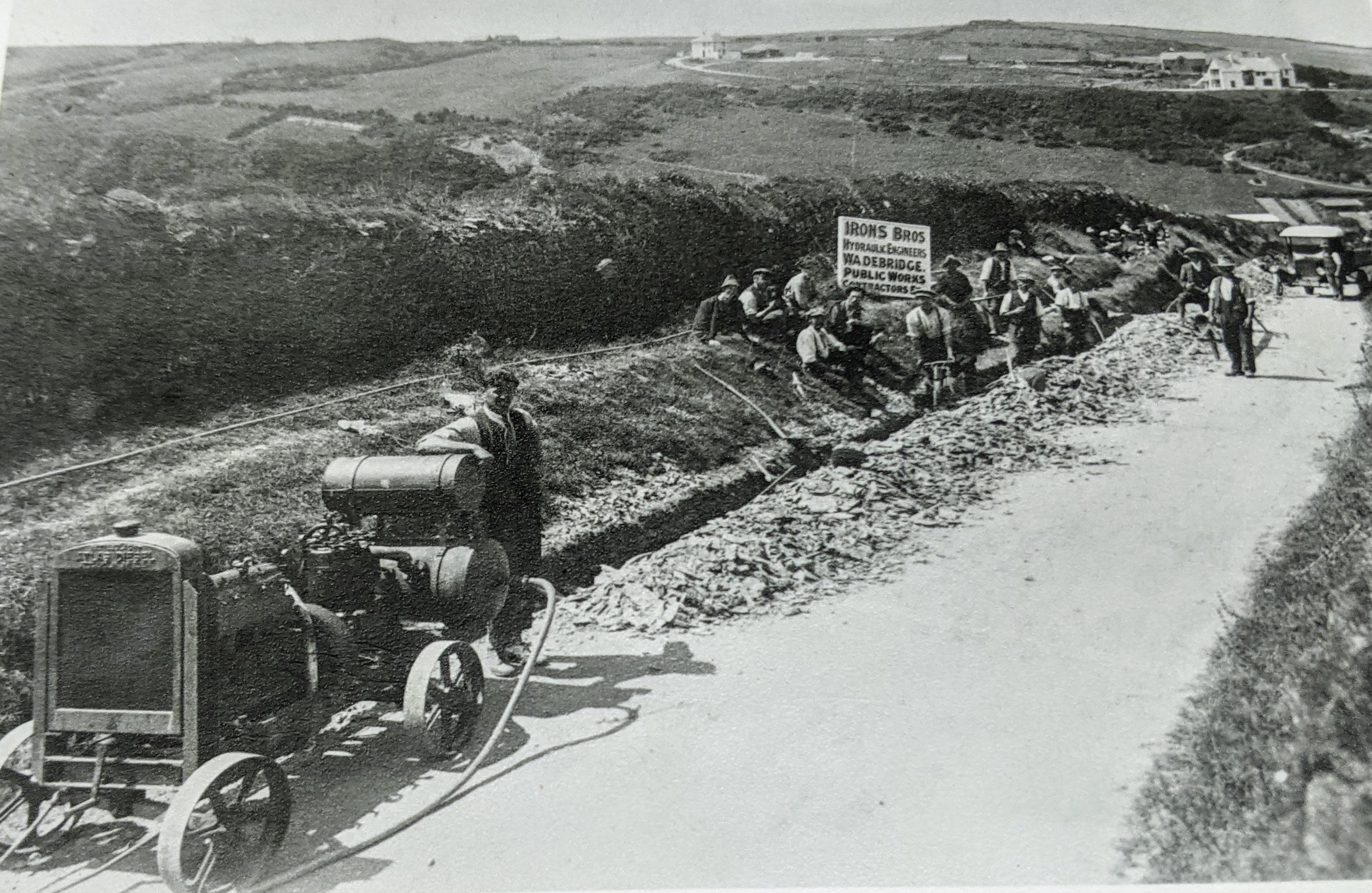
Before 1928 Trebetherick Had No Mains Water and so The Haven was Self Sufficiant
Water Mains laid to Polzeath 1928, to Trebetherick also at the same time I think.
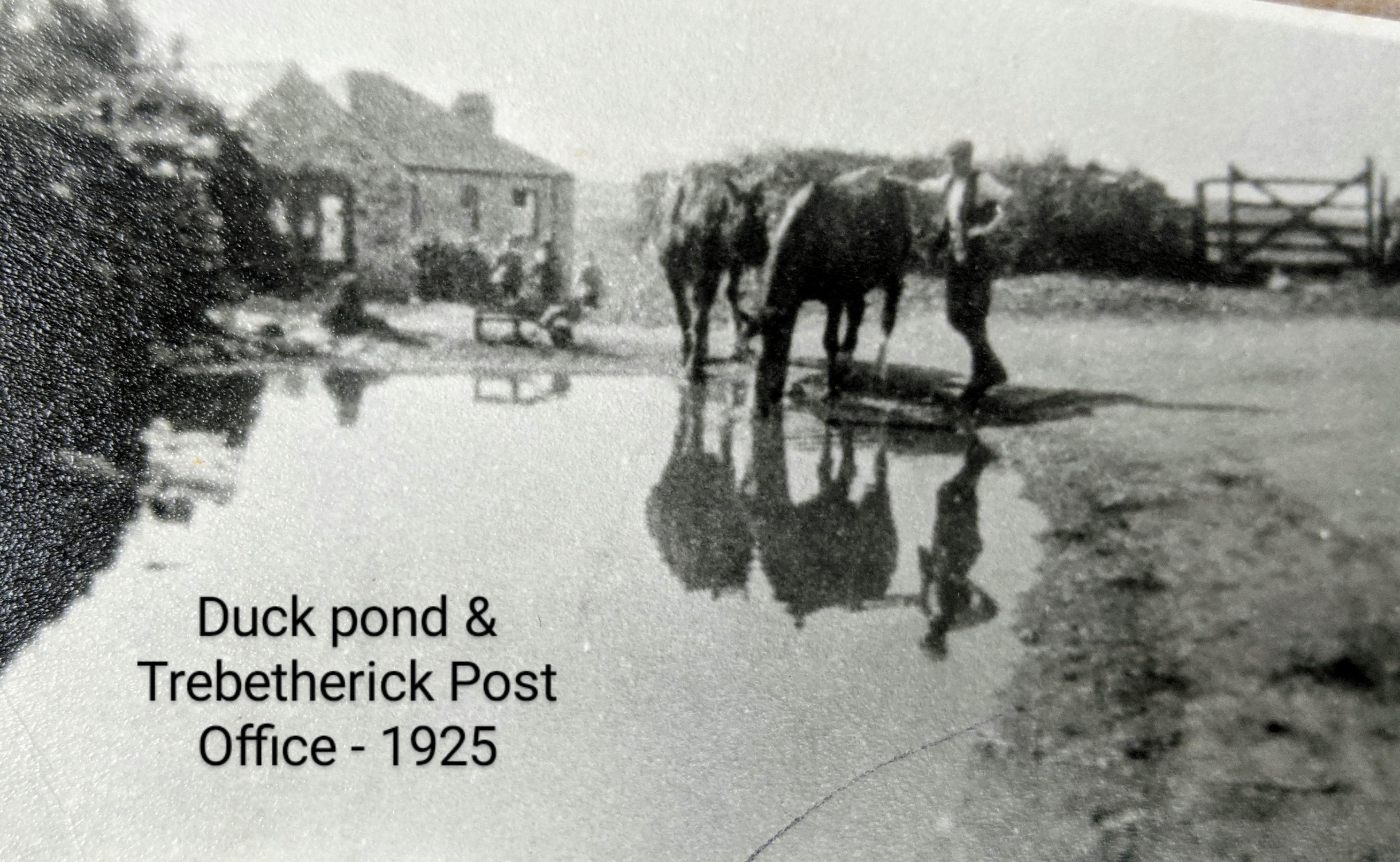
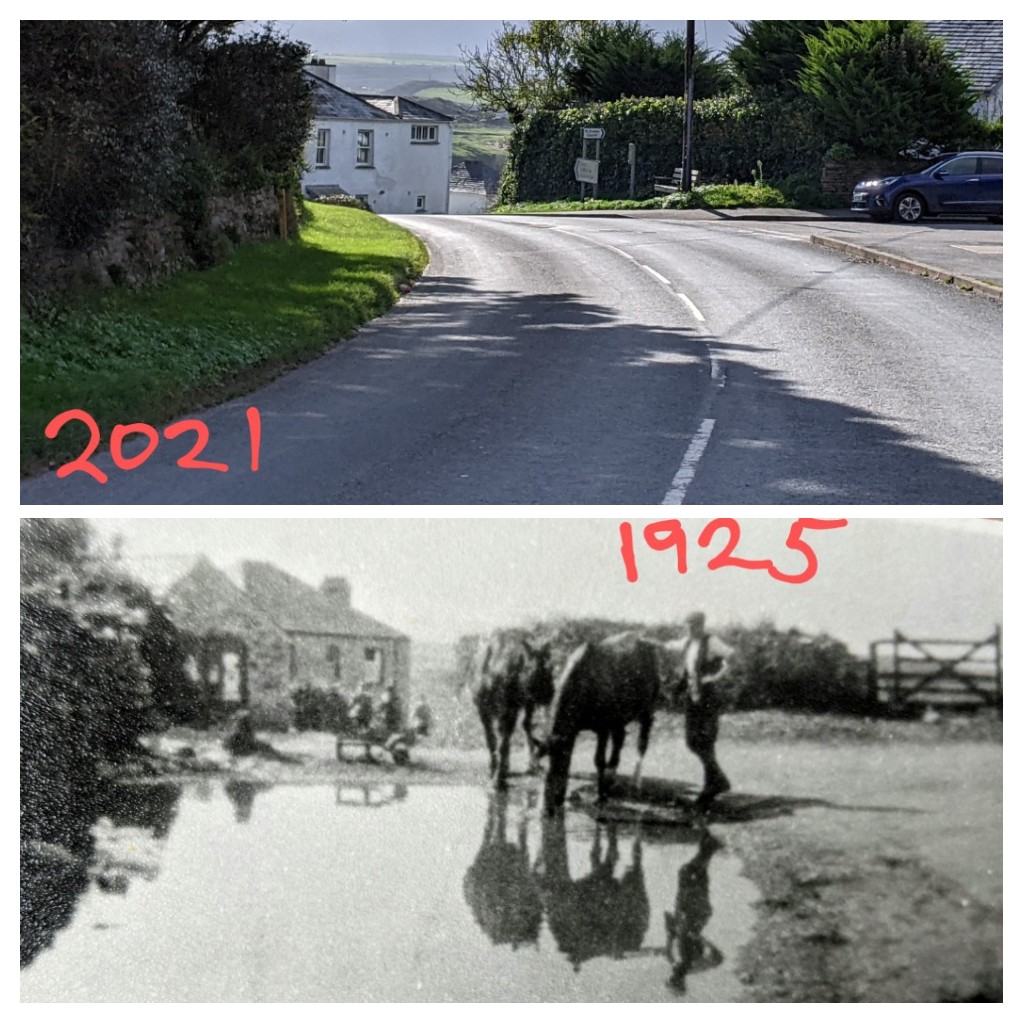
1925 TREBETHERICK DUCK PONDS
Brian remembers, as a boy in the very cold winter of 1946, sliding on the several frozen Trebetherick duck ponds. They were on the road side of Higher Farm, close to the hedge, another was next to Elm Cottage. The one above Worthy House in the photo below was drained in the 1940s for road improvements.
Collage of duck pond 1925 and today 2021
Daymer Bay Garage
Just above the Daymer Bay Garage was one of the village duck ponds which served as a watering spot for working horses, was drained in the 1930s after mains water was installed, making way for the new and larger Trebetherick telephone exchange. On the right is the gate into Ham Field, so called as it was the triangular shape of a ham.
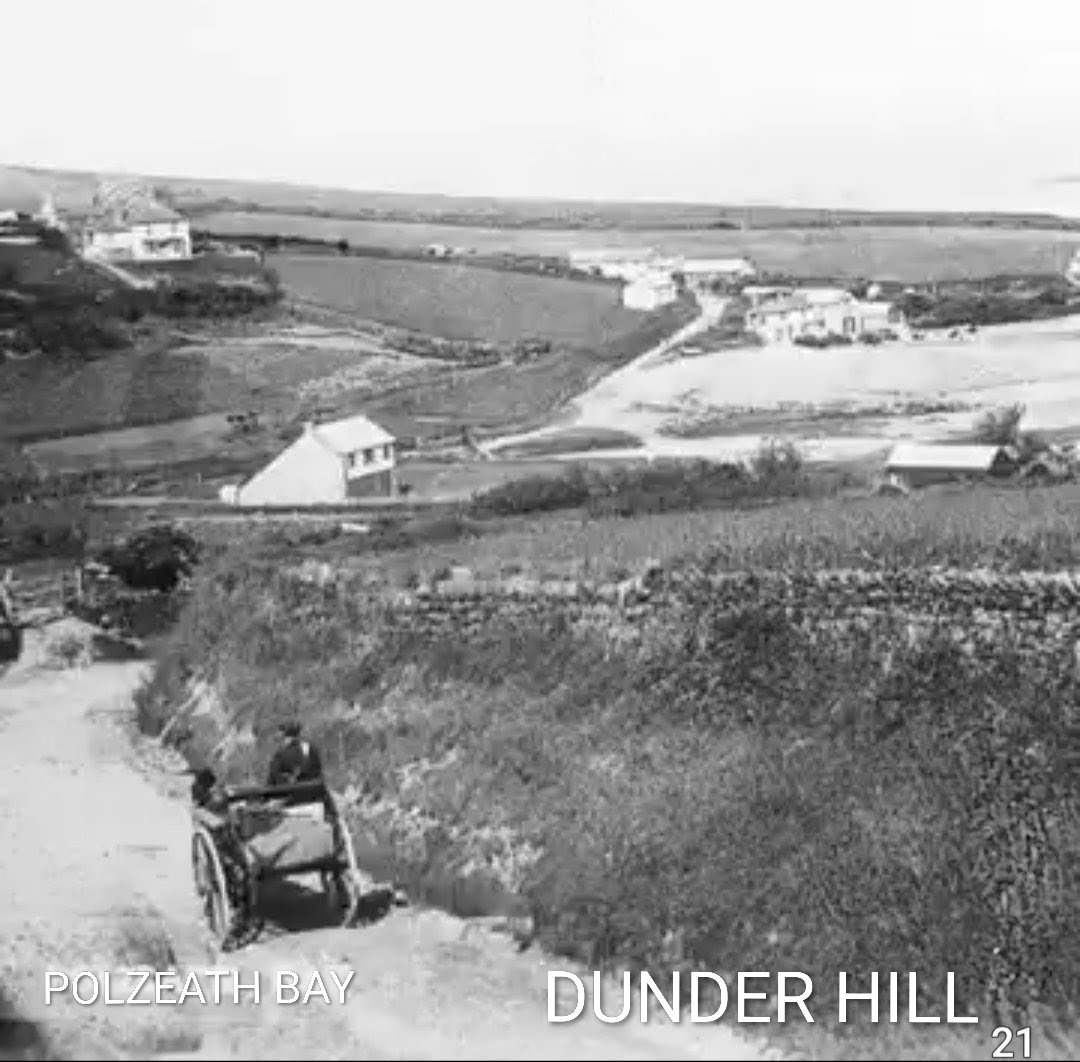
The Two Hills in and out of Polzeath. NE is DUNDER HILL : SW is TREBETHERICK HILL
The older locals use these names. Sadly through not knowing, new comers and recent arrivals have invented other names which is confusing especially for the emergency services.
- The photo below could be Brian’s Grandfather, John Oaten, travelling from Kitts Hill, St Kew, to Trebetherick sometime before 1932 on his pony and trap going down Dunder Hill and through Polzeath. The original Tin Tabernacle still in place at Chapel Corner till 1932 before being replaced in its present day position so the road’s steep and sharp corner could be widened.
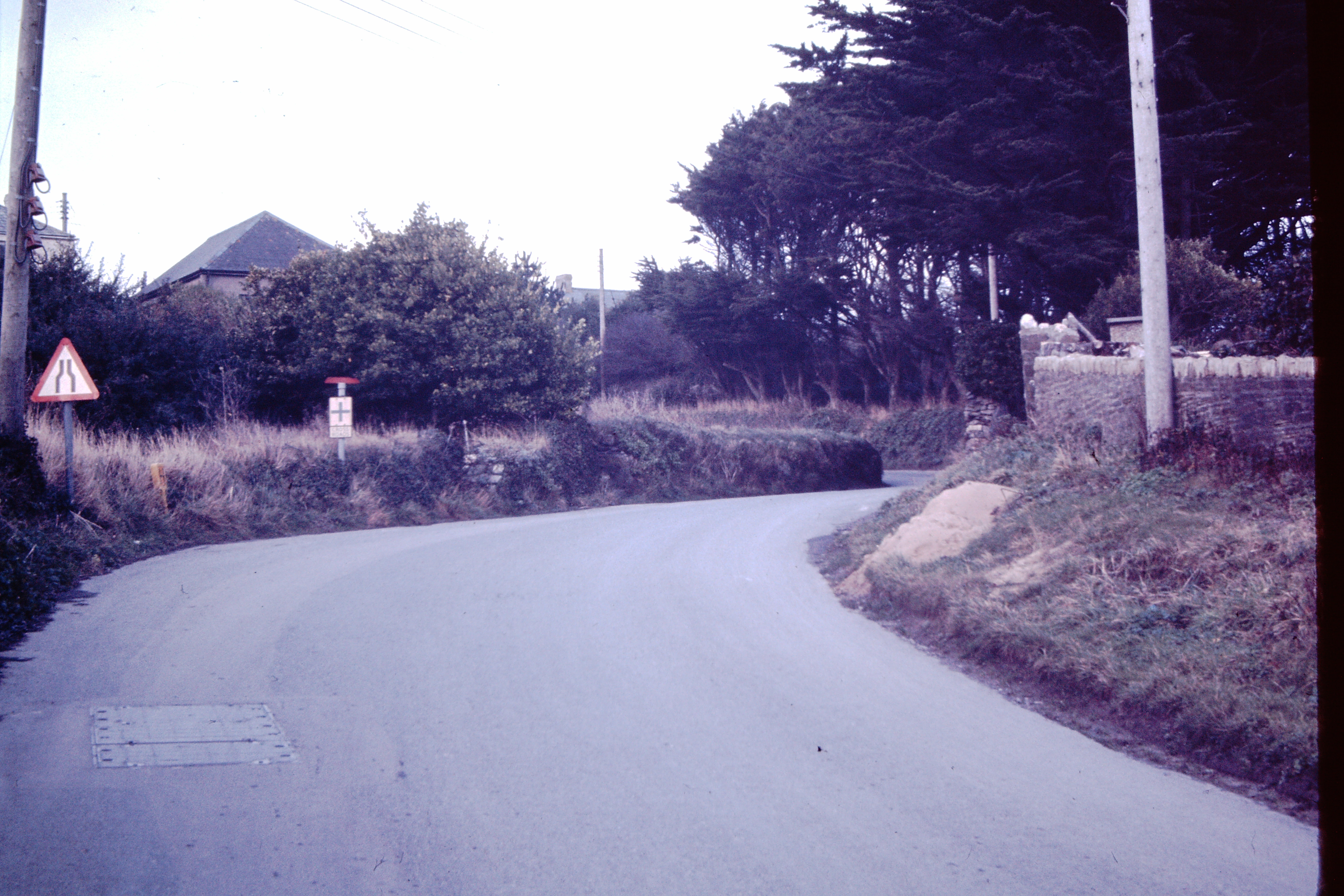
BEFORE THE ROAD WAS WIDENED IN 1960s
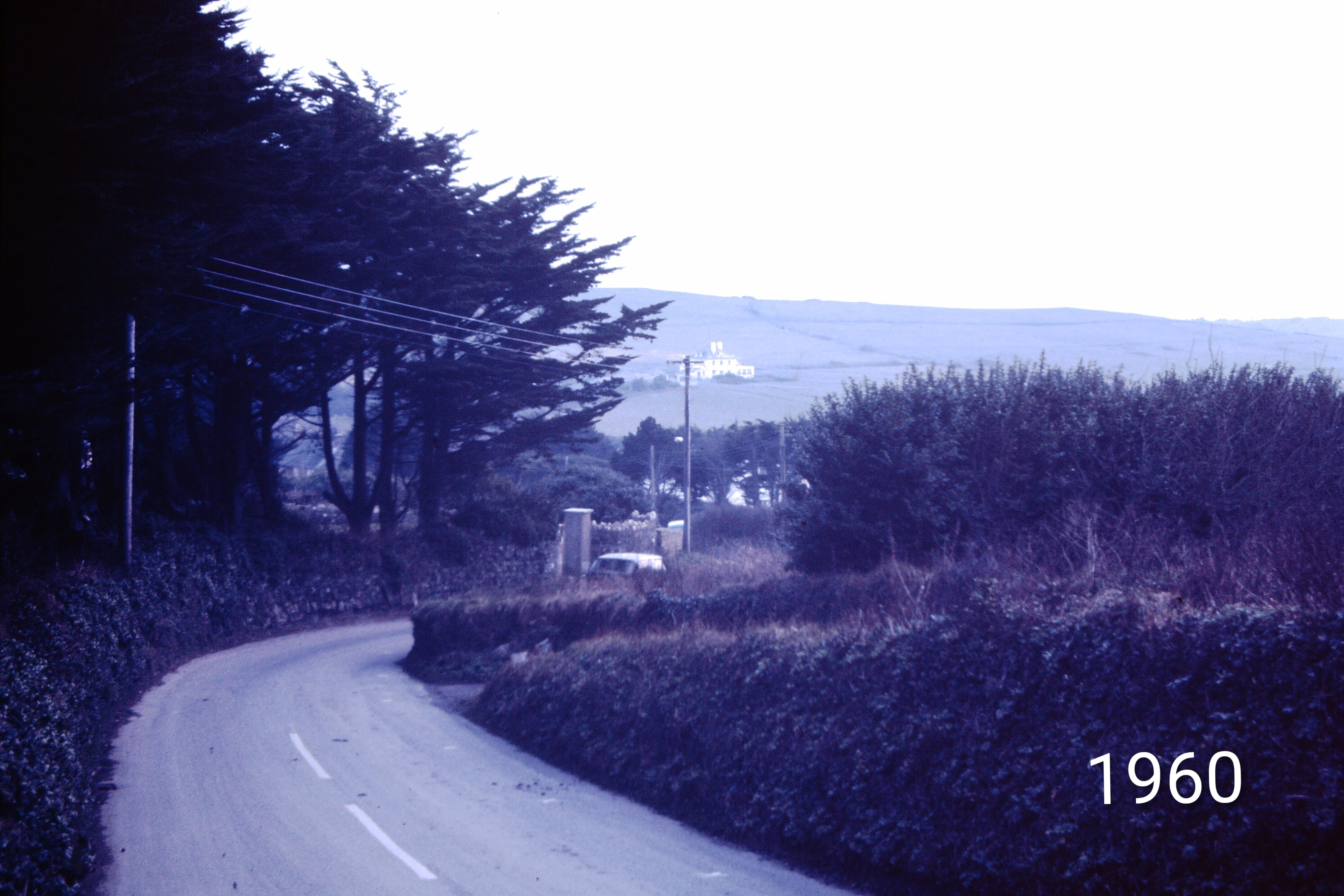
- Looking uphill, at The Haven entrance on the right (parallel to the old road), Old Farm is the house roof you can just about see in the centre, with the old Daymer Garage building to the left, demolished for the road straightening and widening improvements in late 1960s.
DAYMER BAY GARAGE and WORKSHOPS
- The Daymer Bay Garage, located at the junction of Worthy Hill and Daymer Lane, was owned and run by Norman Cleave (photo below of Mr and Mrs Norman Cleave), a motor car enthusiast. He was the father of Leadville Cleave and grandfather of Jon Cleave, from Port Isaac. The garage included workshops, garages, and a petrol pump. As the numbers of motor cars increased, Norman also developed Clock Garage at Rock and generously donated some land behind to enable a social club to be built for the locals and in particular the men coming back from WW2 in 1946. 80 years on, it is now called the Rock and District Sports Club.

Below the garage on Daymer Lane, Worthy House was built and served as both a Post Office and a telephone exchange, playing a central role in the village’s communication.
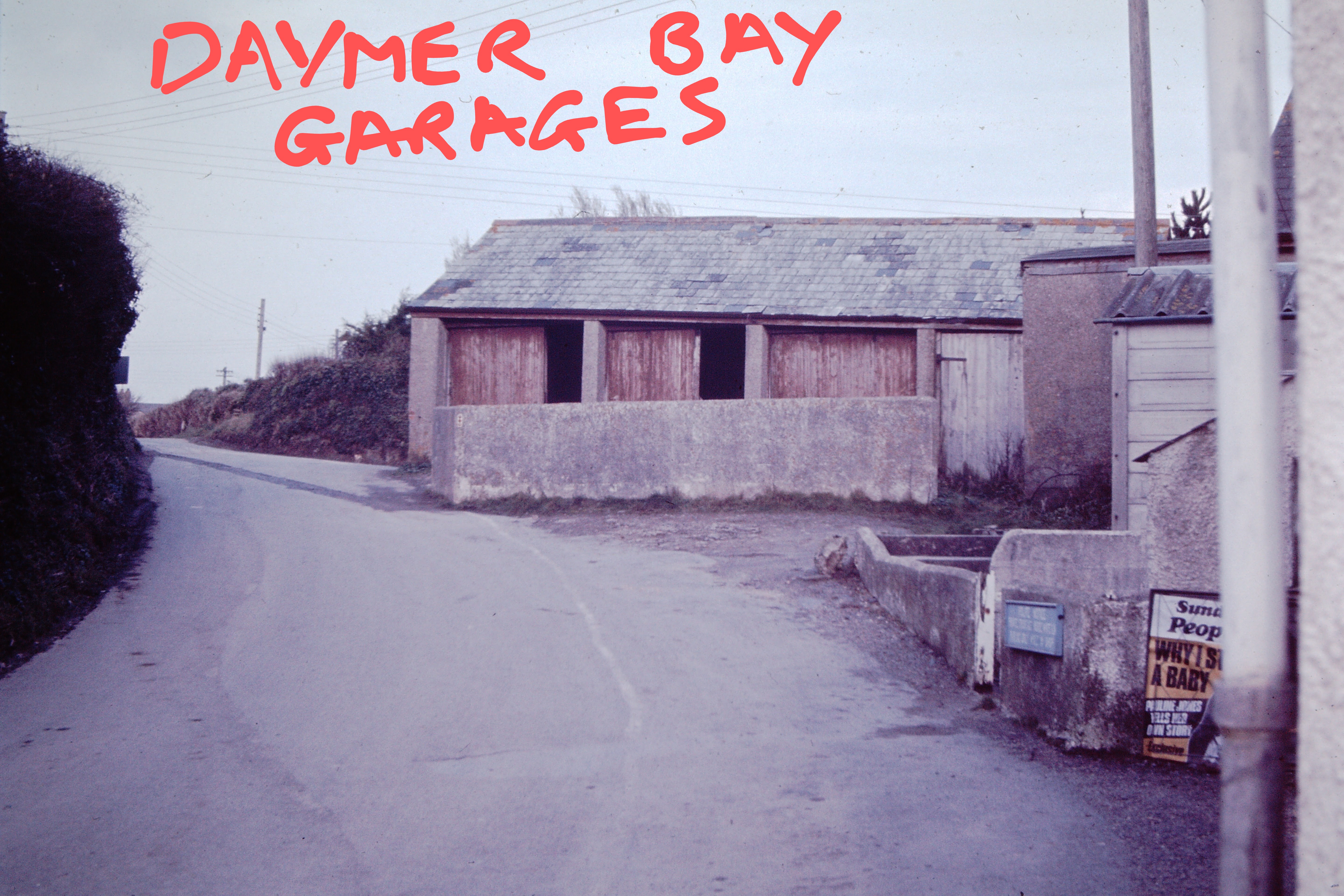
View of the junction between Daymer Lane and Worthy Hill The gable end of the set of 4 garages
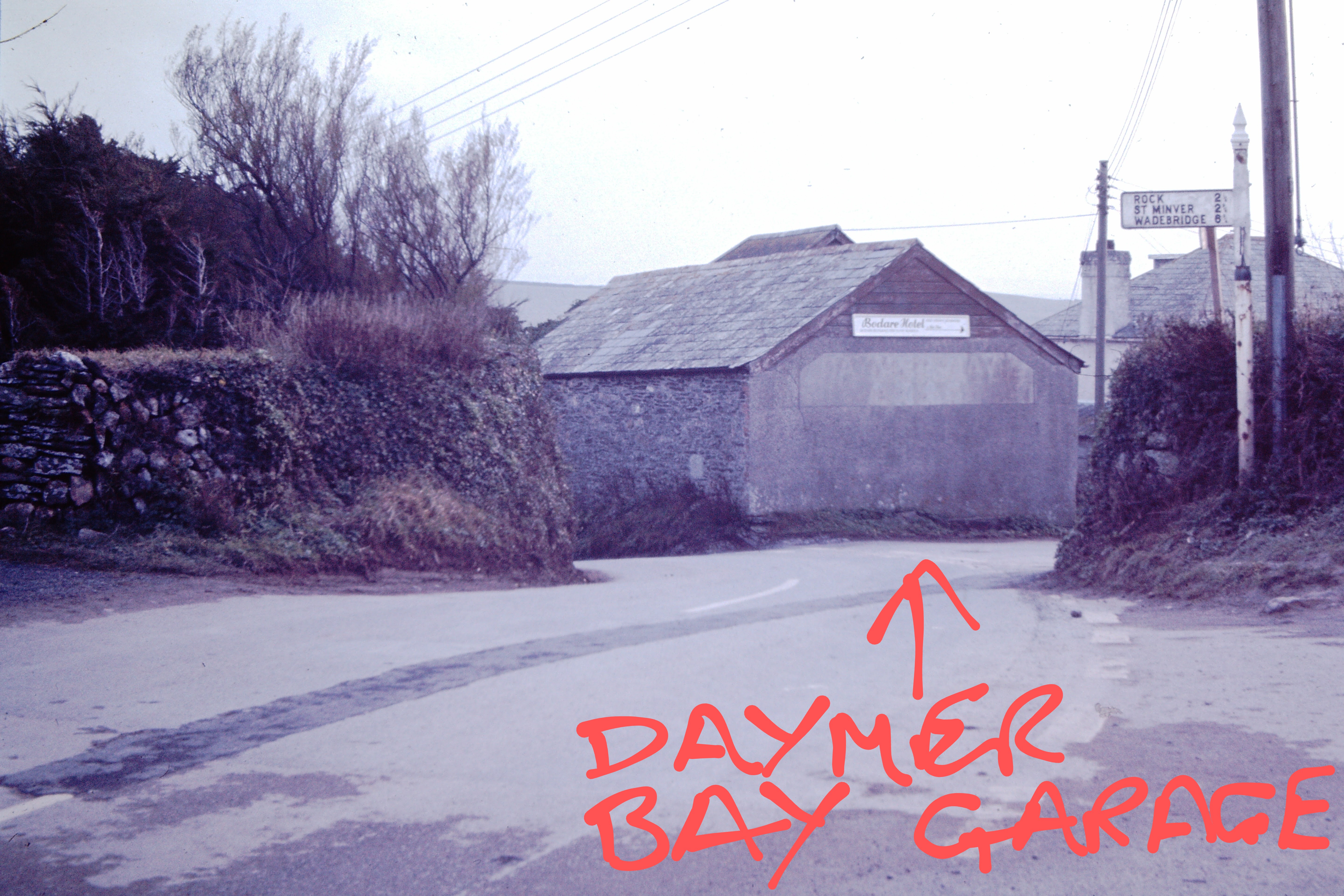
This was looking up, at the top of Worthy Hill, Daymer Bay Garage, might have been built before WW2 but it was derelict in 1956
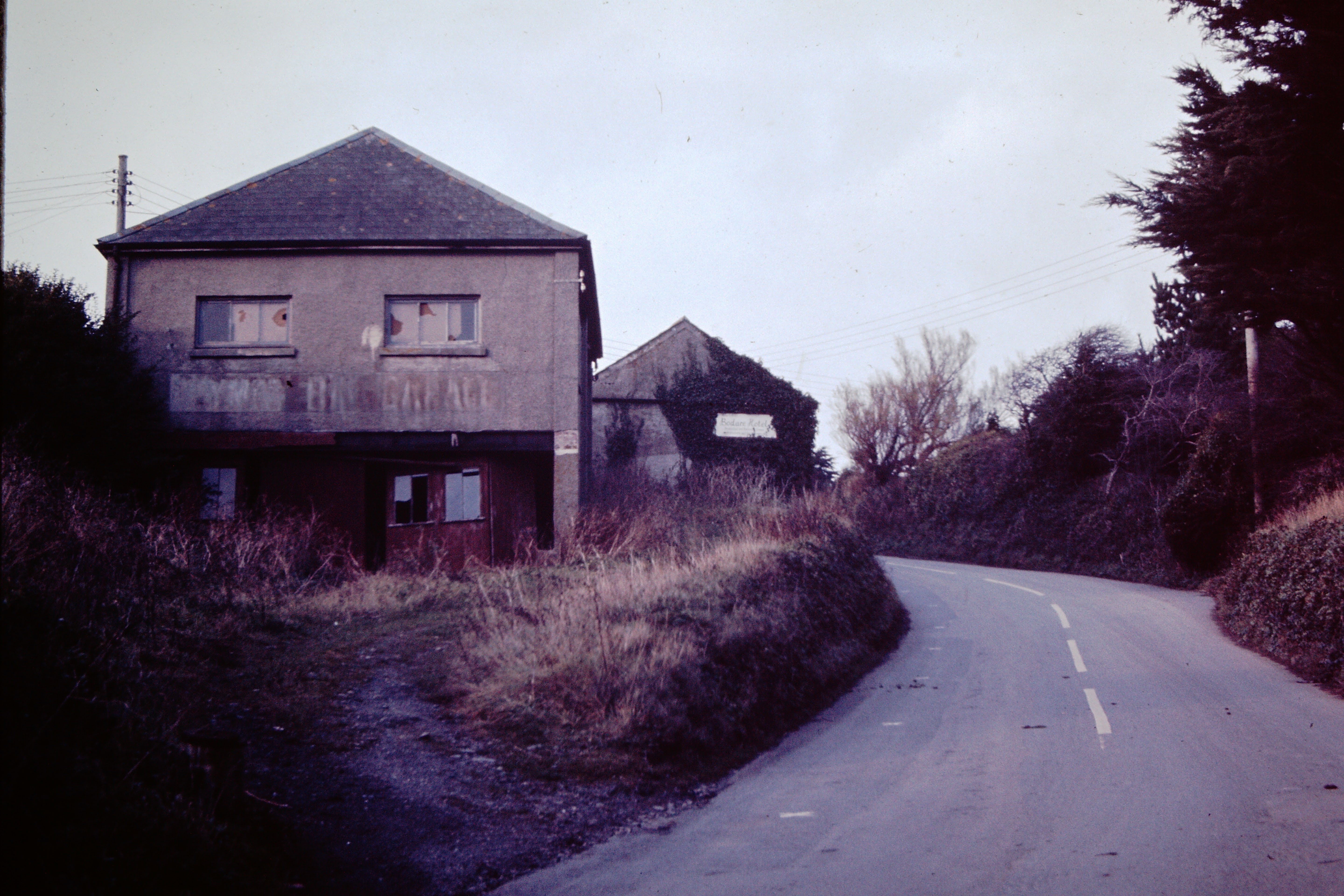
At the top of Worthy hill, looking down, Daymer Bay Garage is on the right and The Haven entrance is on the left
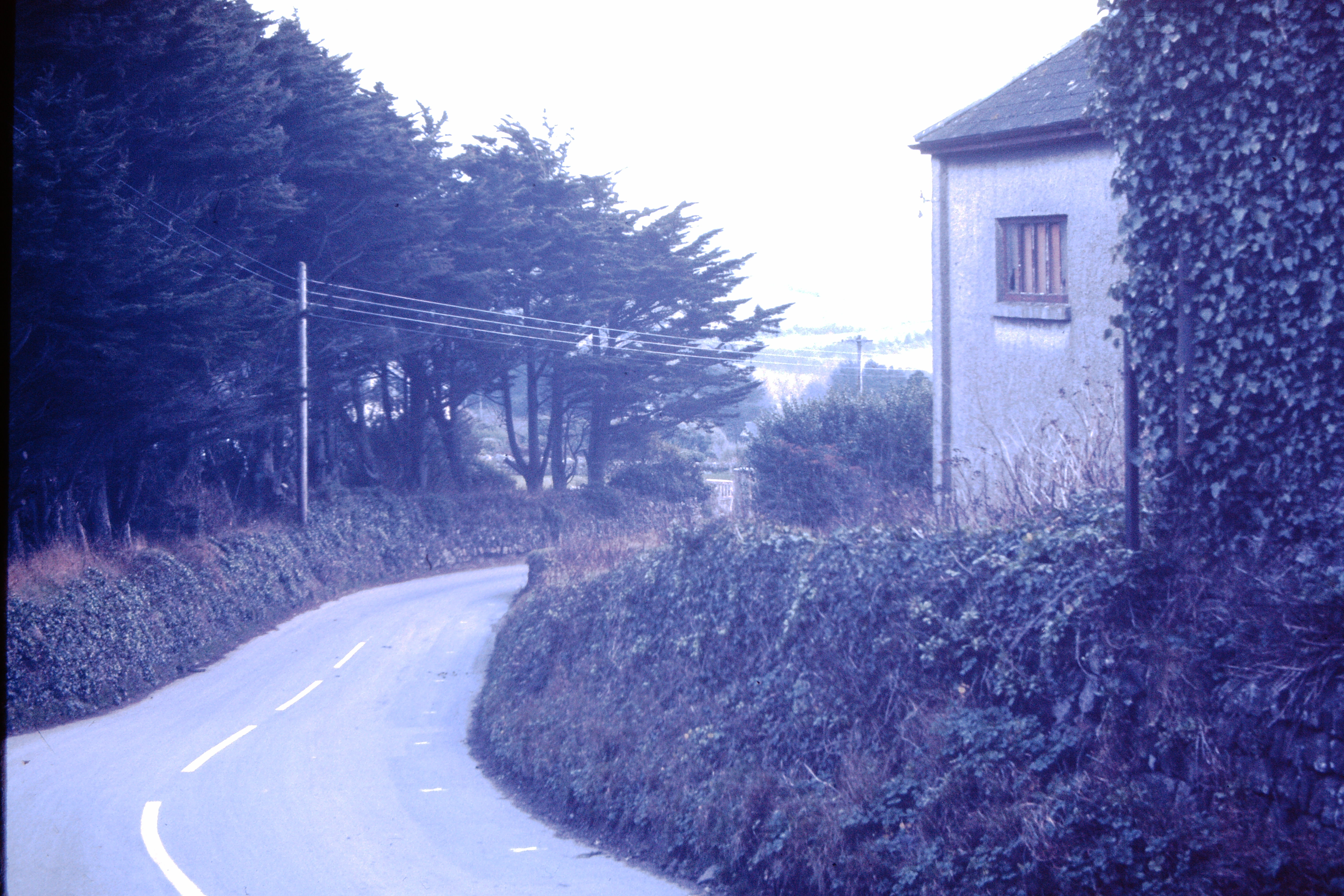
Almost at the top of Worthy Hill, The Haven entrance is on the left with gate posts parallel with the original old road. Daymer Bay Garage is now gone.
Looking up Daymer Lane almost at the top, this was a set 4 garages with the post office on the right
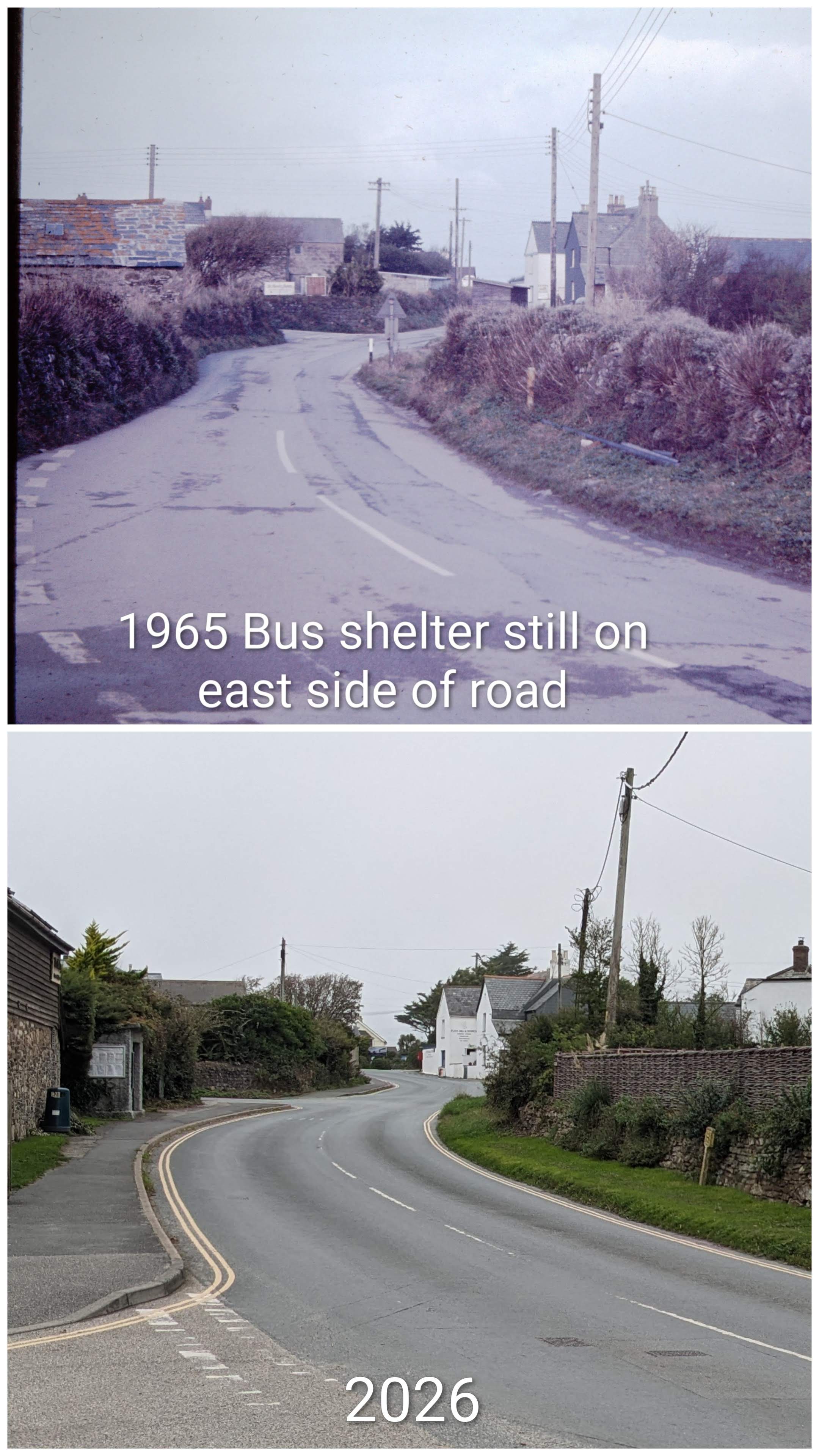
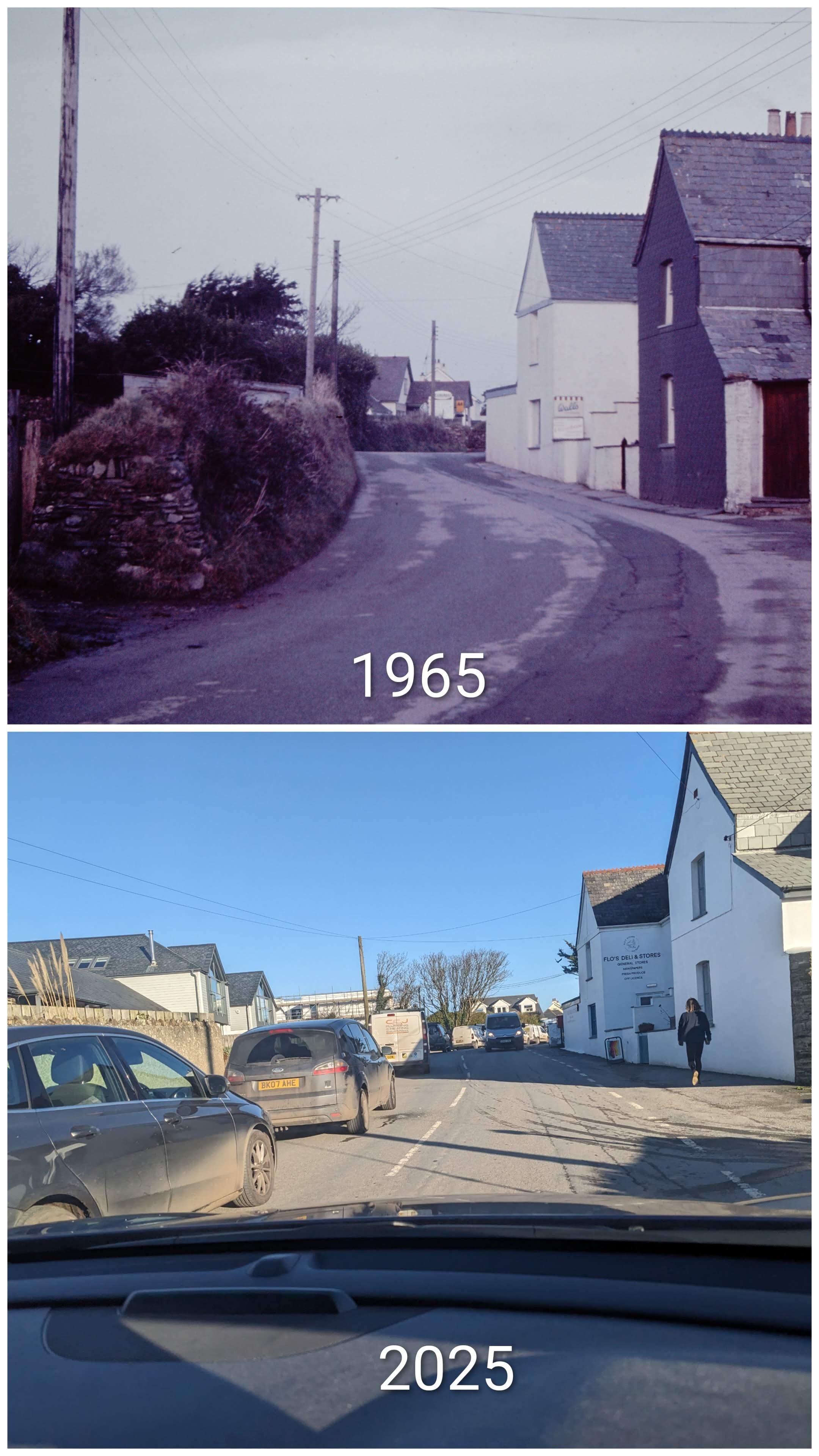
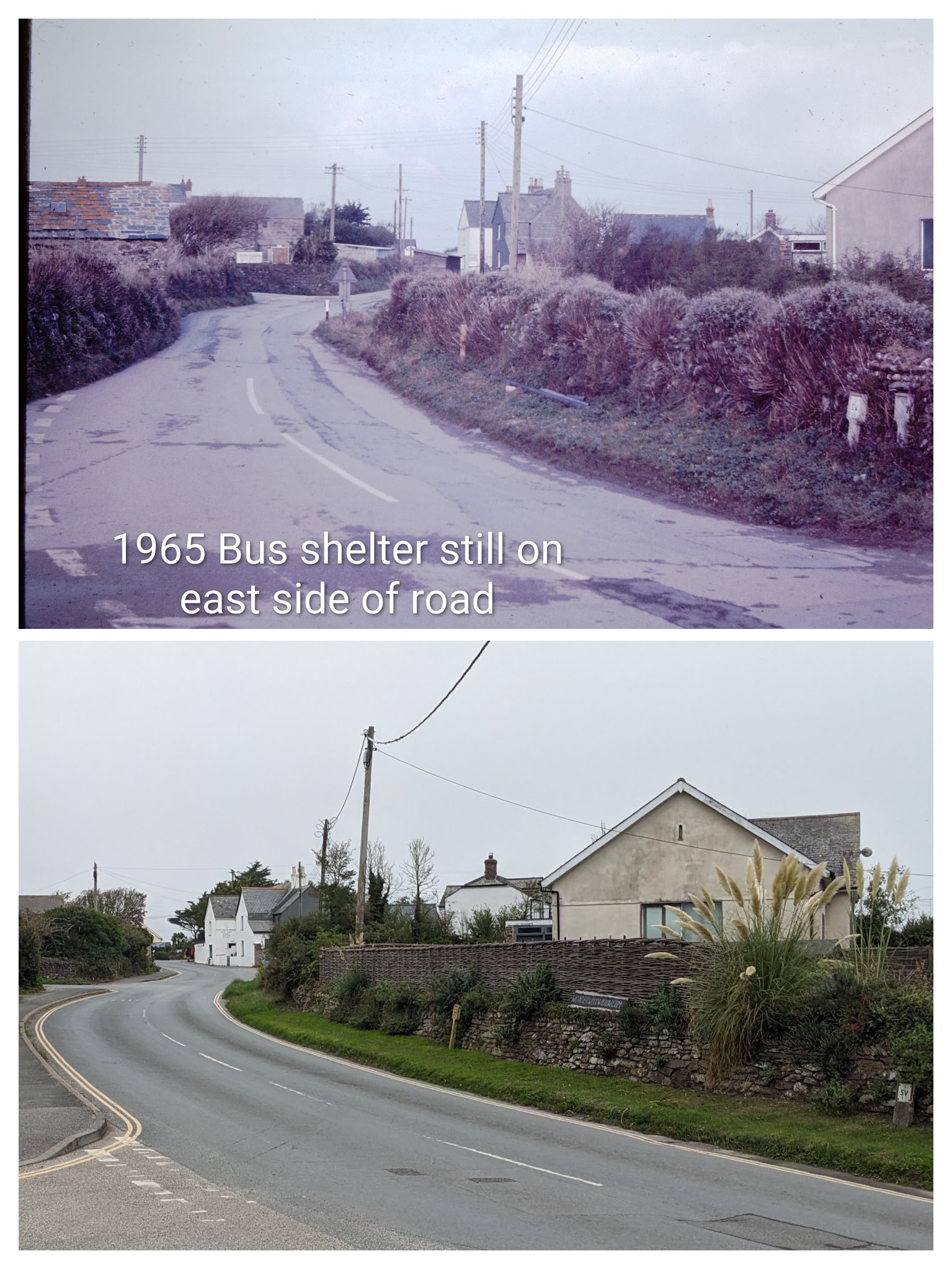
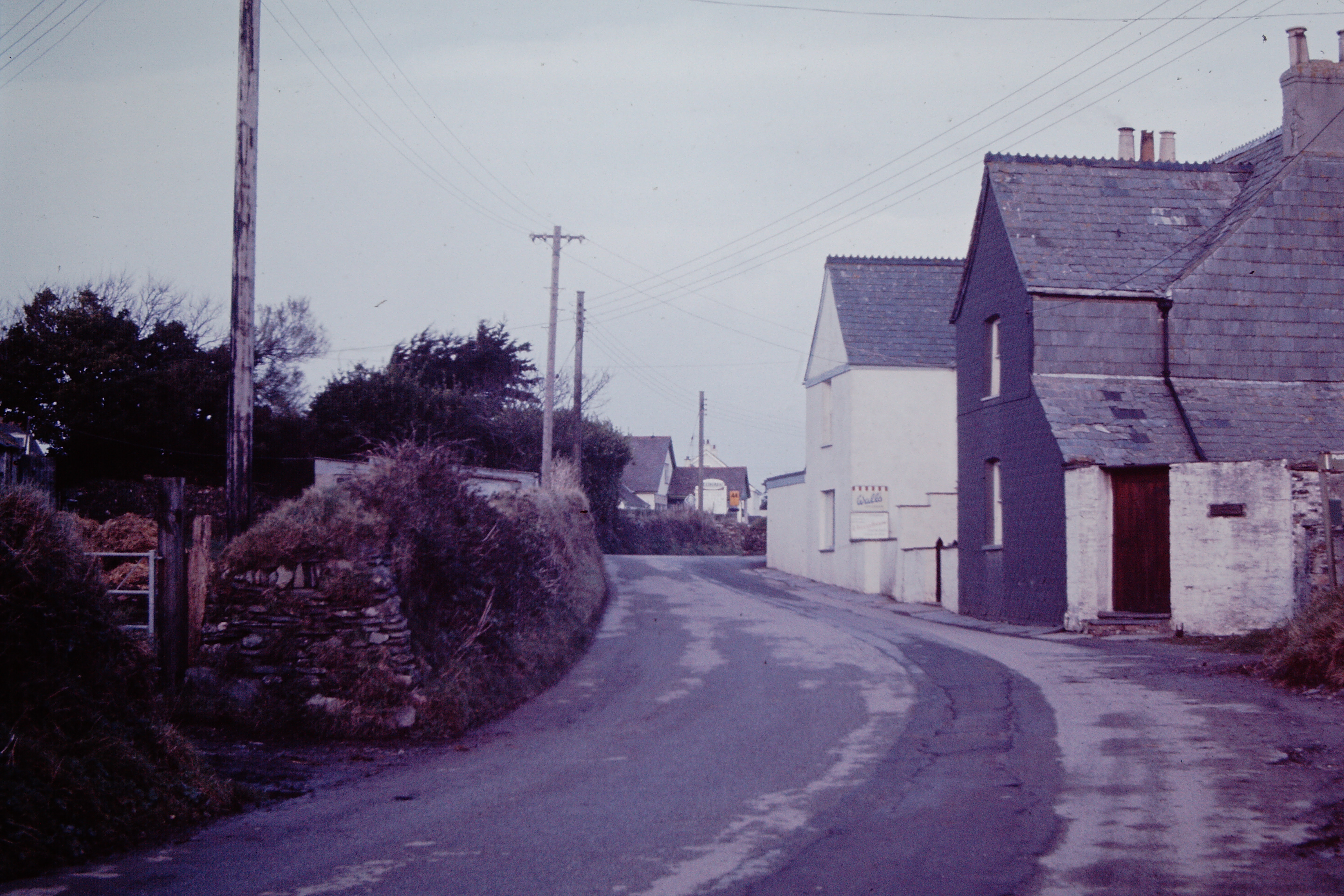
- Higher Trebetherick - Looking North - Before Road Widening 1960s
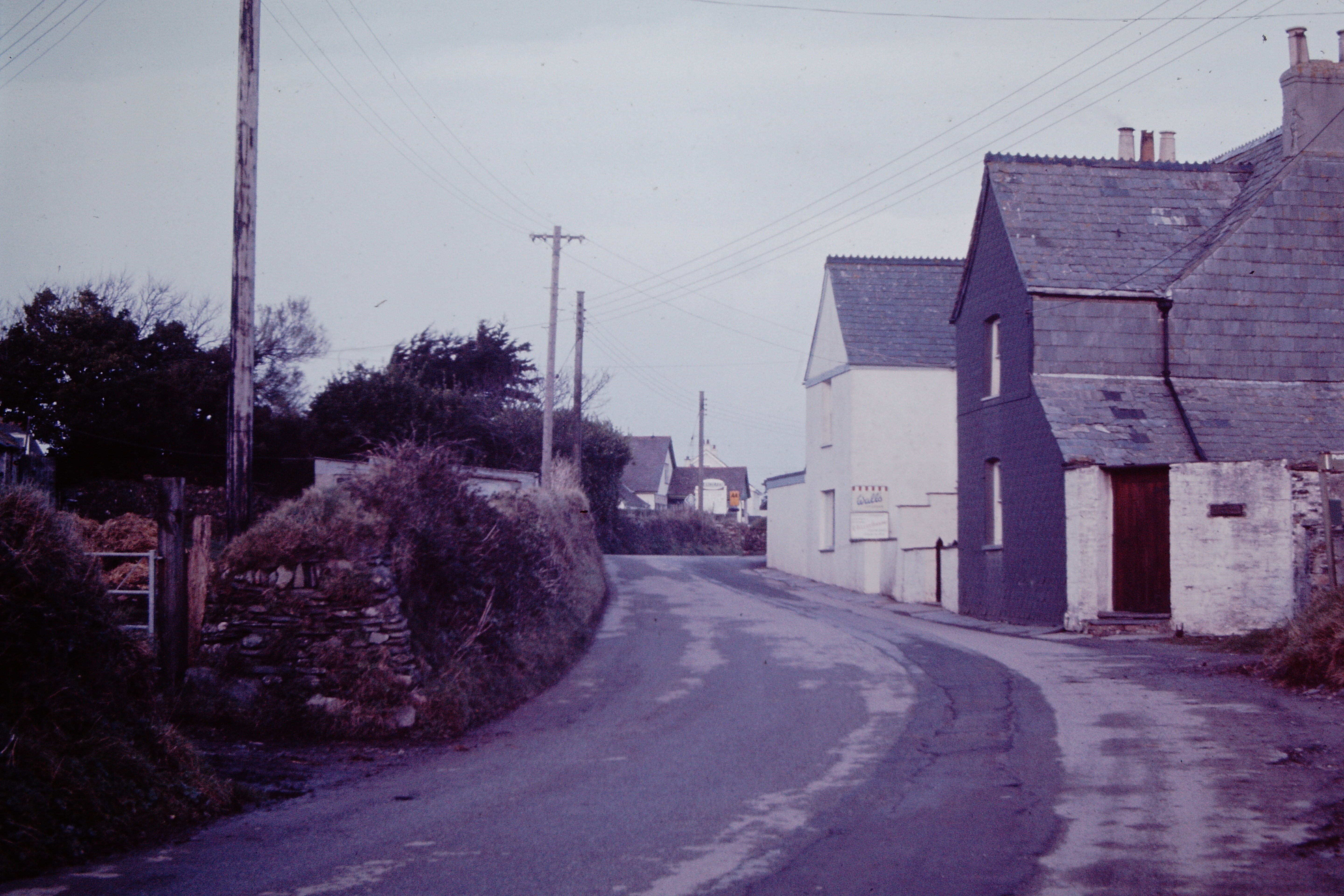
- Higher Farm on Left - Coastguard Cottages now Shop on Right.
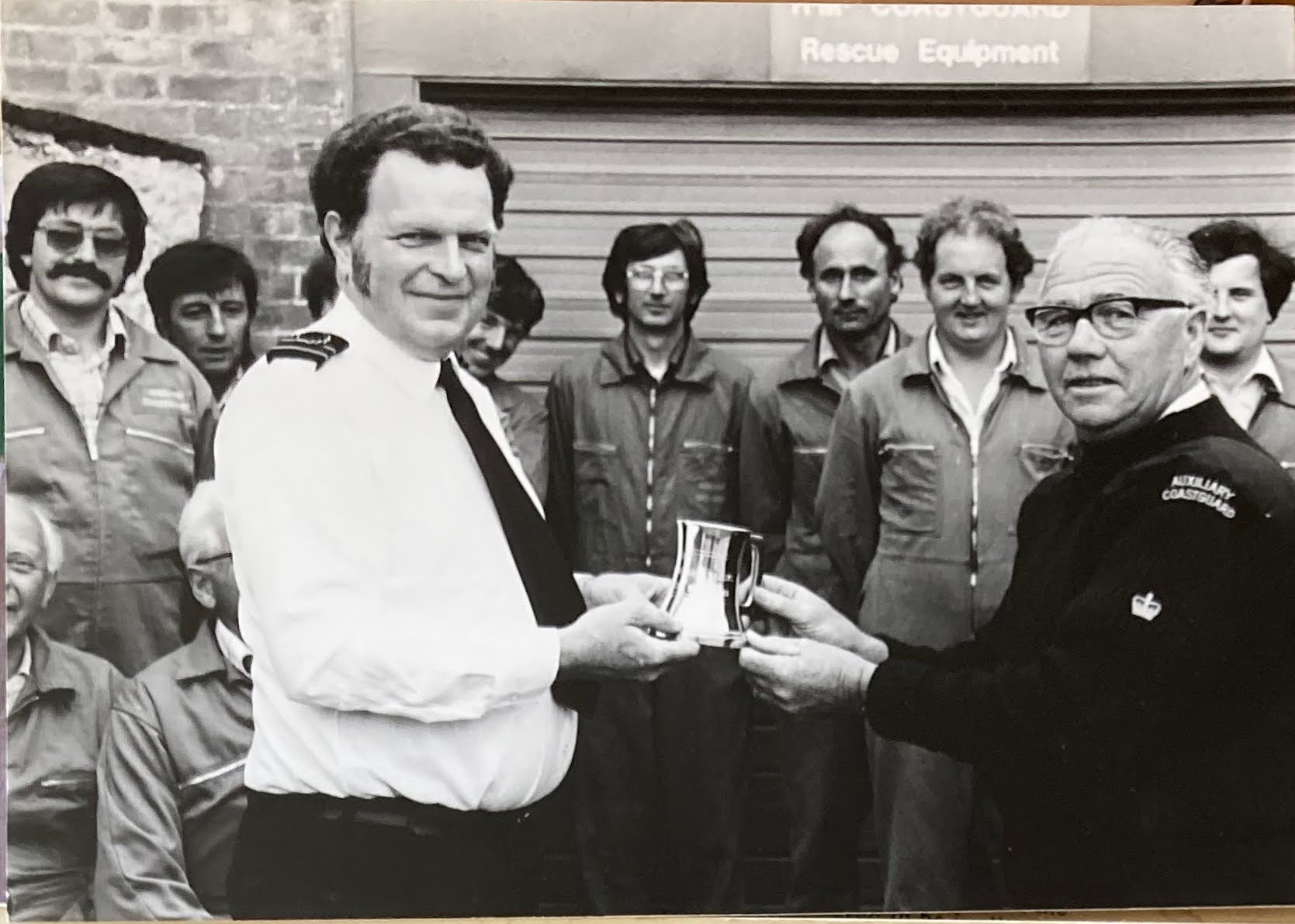
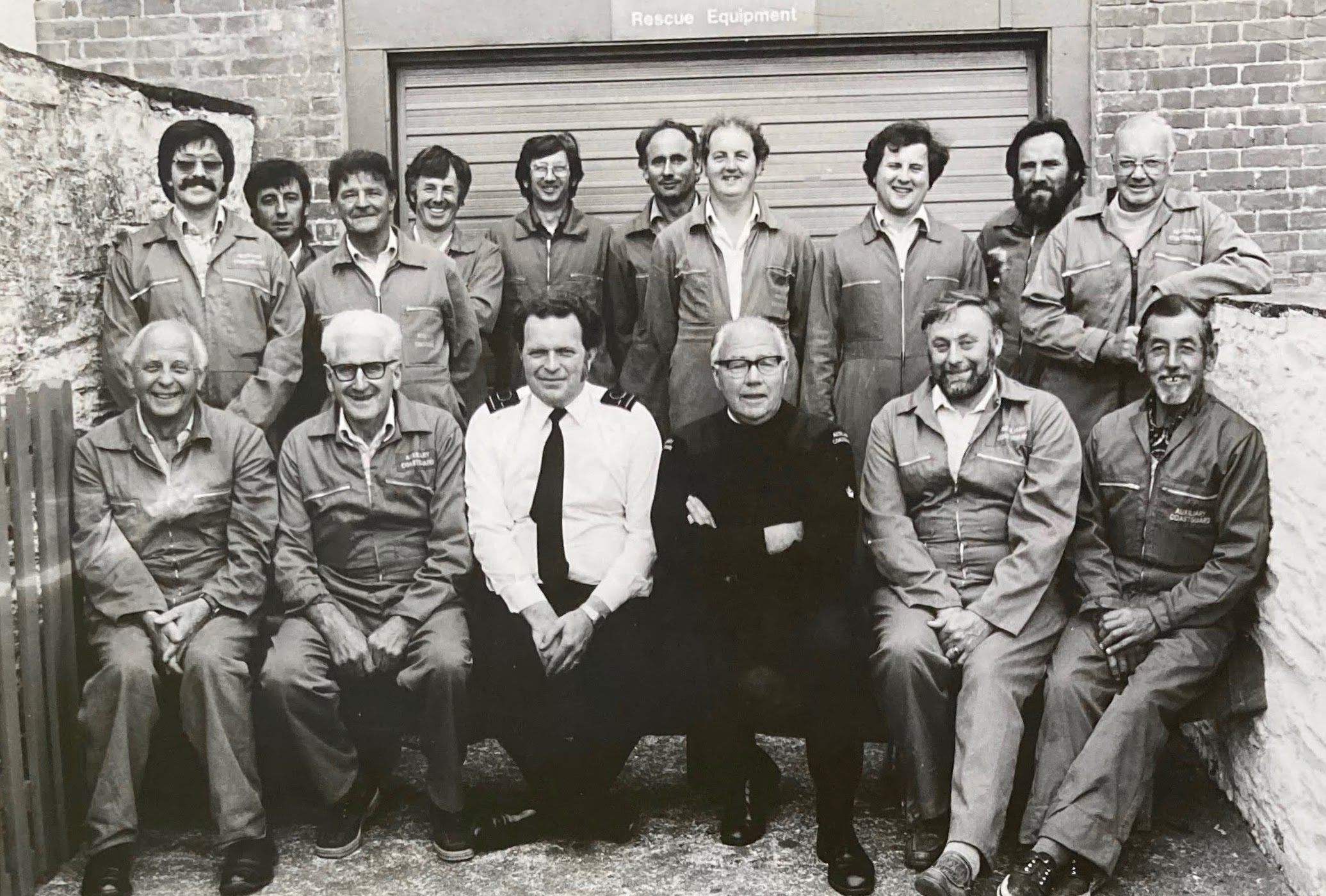
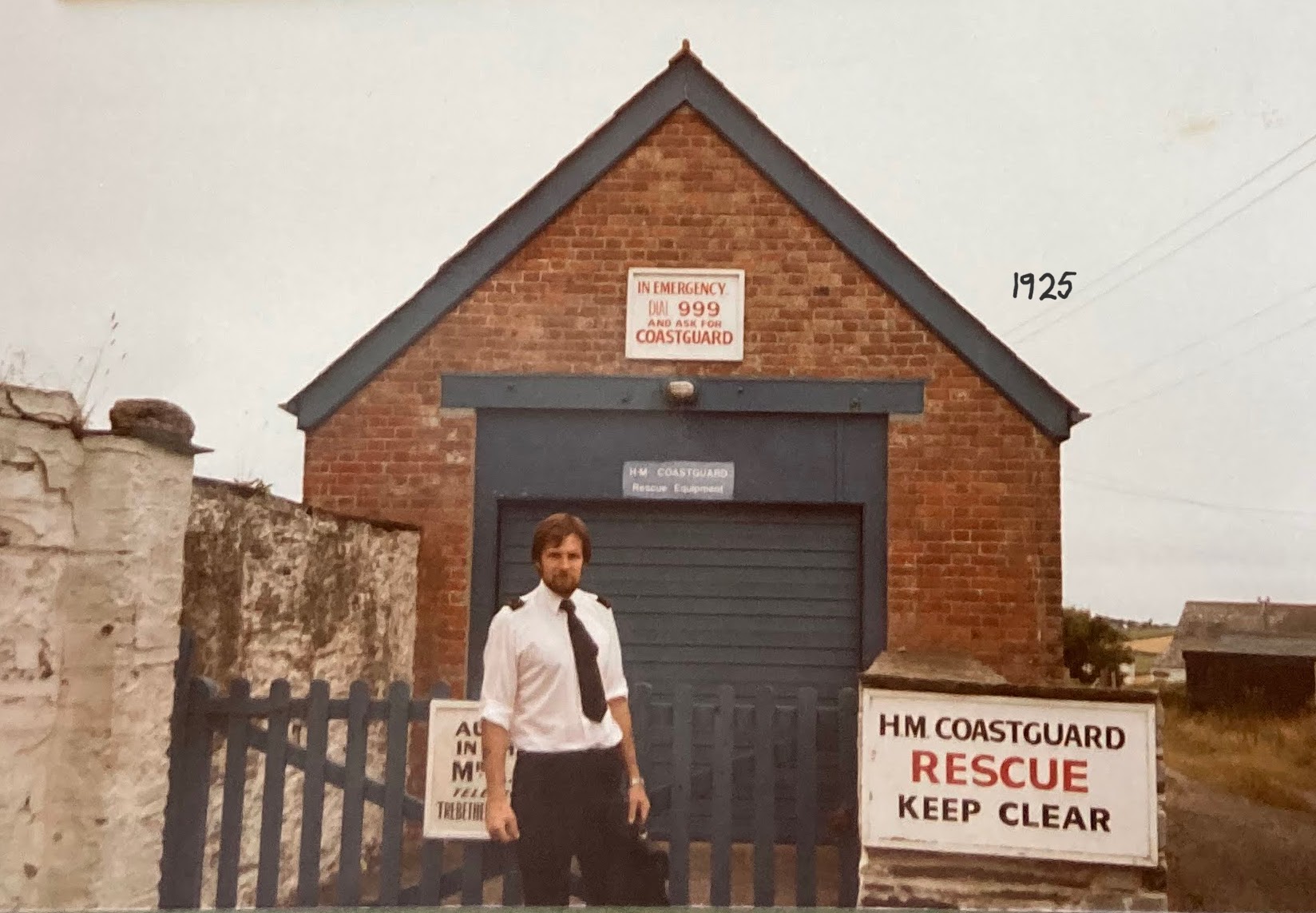
1840 - Trebetherick Coastguard Cottages and Rocket Equipment House was originally built in 1840 as a pair of semi-detached buildings for the full time Coastguards. The Trebetherick Coastguard team regularly risked their lives. In April 1900, they rescued five crewmen from the wrecked ketch Peace and Plenty and Lifeboat Arab
From the 1880s to the 1930s, the Trebetherick Rocket Apparatus was regularly brought down by a horse drawn cart for practice. The apparatus was kept in the distinctive brick building still known as The Rocket House, adjacent to the Coastguard Cottages.
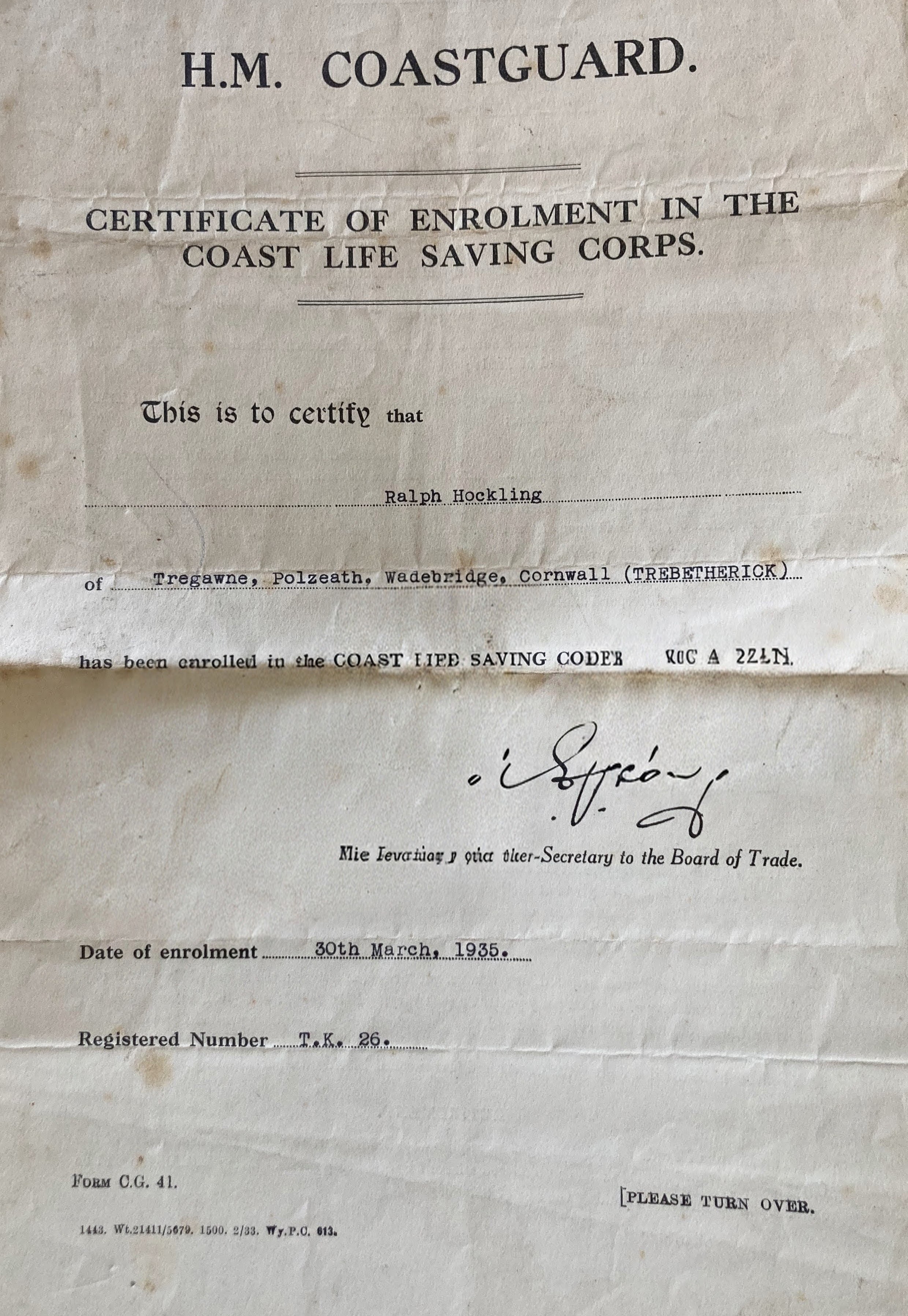
Eventually as the RNLI grew and developed, the role of Coastguard became a part time position, the cottages were sold separately as Upalong and Tregawne (Ralph was born at Tregawne Farm, Withiel, hence the name Tregawne). The latter was owned and run as Trebetherick Stores by Richard Tellam-Hocking, and by their son Ralph and his wife Audrey Tellam-Hocking and later their son Nigel and his wife Sue. Since 2023 the shop has been run by Flo as Deli Cafe and General Store.
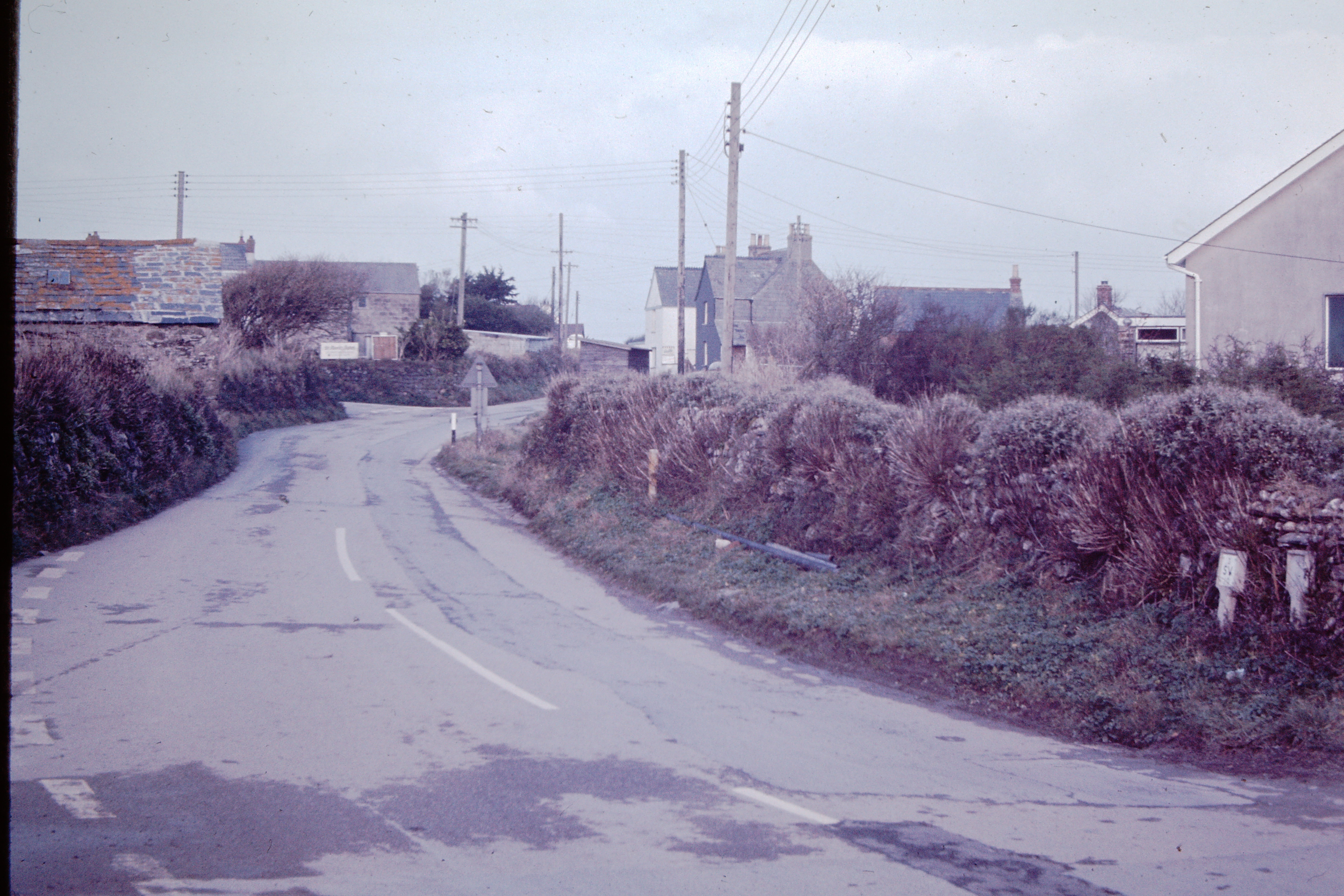
New Telphone Exchange on right
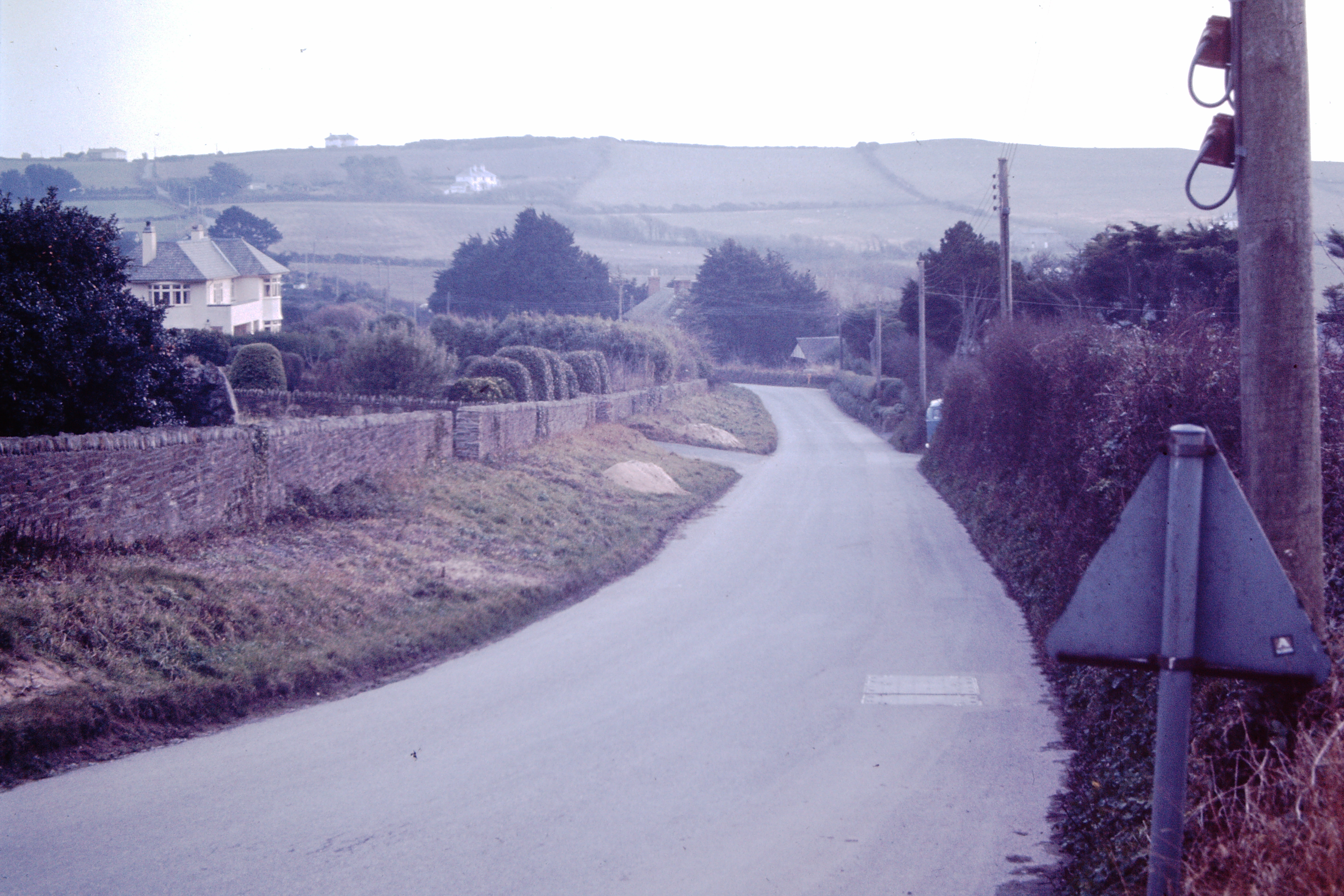
- Worthy Hill - Looking South - Floraldene on Left.
Before the building of Tide Race, Breafield and public footpath. Note the council wintertime piles of sand to grit the hill
- Worthy Hill
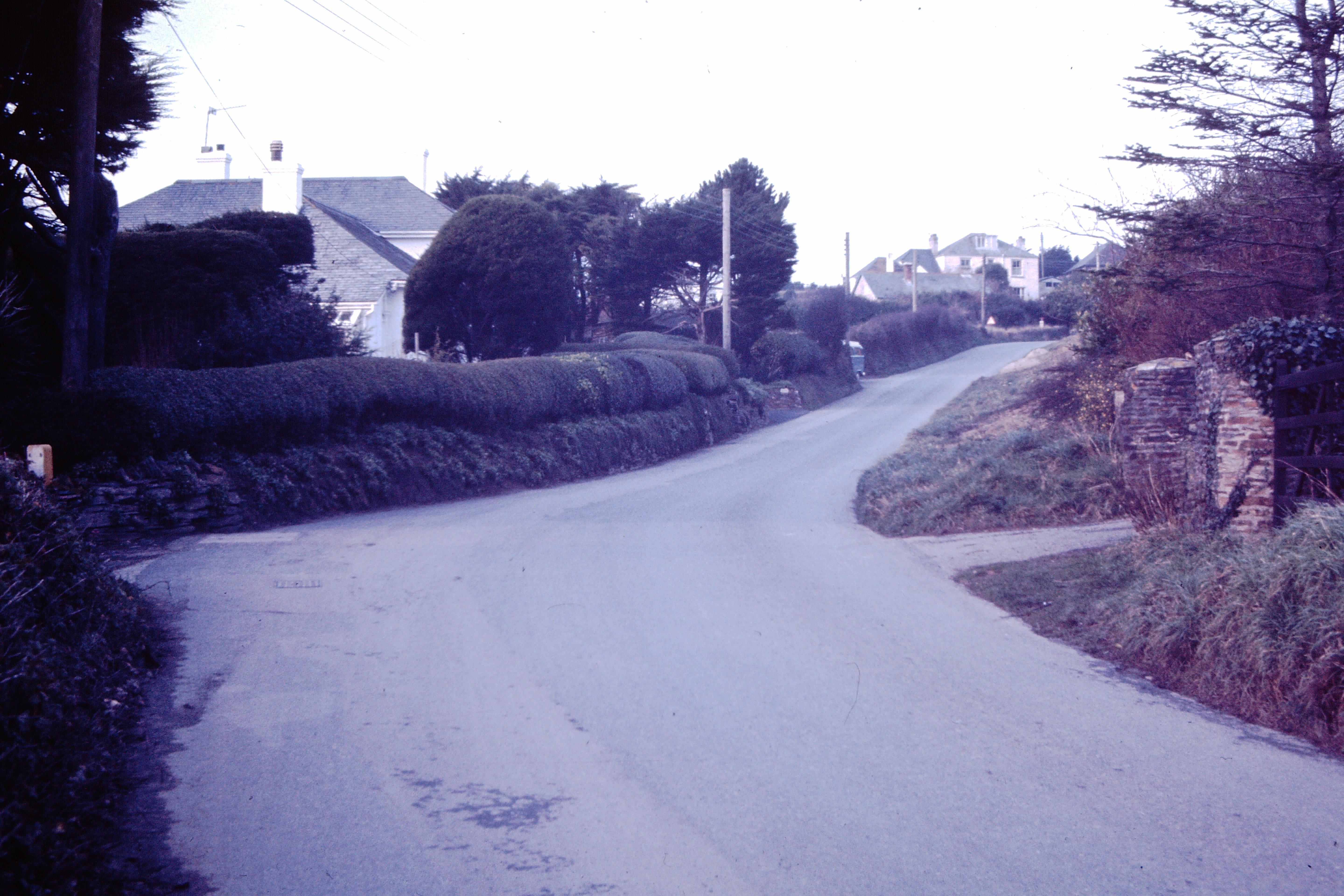
Looking North - Floraldene On Right
- 1979 Daymer Beach, when it was a lovely sandy beach.
